


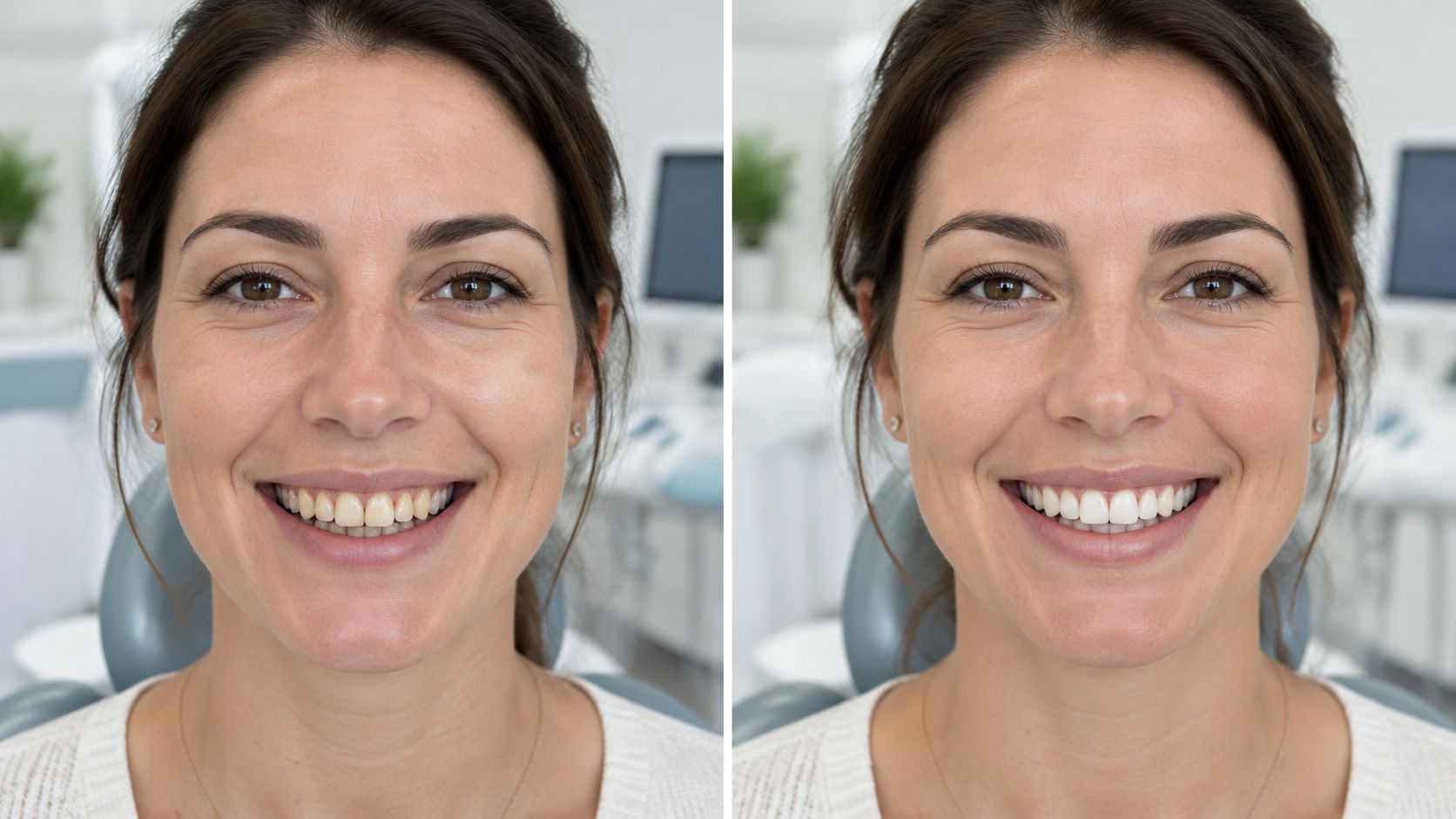
You're scrolling through smile photos late at night, zooming in on one front tooth that never matches the others, and every result looks perfect. That's exactly why dental veneers before and after images need context. A photo can show whiter, straighter looking teeth, but it can't show enamel thickness, gum health, bite pressure, decay, or why whitening, bonding or orthodontics was ruled out first.
This guide organises six common scenarios by the problem you start with, not by product. For each one, you'll see what we'd check, what could make veneers unsuitable, and what maintenance follows. Suitability and final treatment plans always depend on clinical examination and individual needs.
At Yoyimé Clinic in Deira, Dubai, we start with a thorough dental consultation to evaluate oral health, discuss aesthetic goals, and determine whether veneers and whitening are suitable. Cosmetic dentistry at Yoyimé Clinic includes veneers, whitening and smile design, but the most conservative option that meets your goal is often the better starting point.
Table of Contents
- 1. Case Example 1 Deep Staining That Does Not Respond to Whitening (Porcelain Veneers)
- 2. Case Example 2 Chipped or Worn Front Tooth After an Injury or Habit (Bonding Versus Veneer)
- 3. Case Example 3 Small Gaps Between Front Teeth (Veneers Versus Orthodontic Options)
- 4. Case Example 4 Small or Irregularly Shaped Teeth (Peg Laterals and Uneven Edges)
- 5. Case Example 5 Worn Enamel From Grinding or Acid Exposure (Restorative Veneers and Protection)
- 6. Case Example 6 Multiple Teeth Uneven in Shape, Shade, and Spacing (Smile Makeover Planning)
- How the six veneer case types differ in concern, options, and preparation
- Planning Your Own Veneer Consultation in Deira
1. Case Example 1 Deep Staining That Does Not Respond to Whitening (Porcelain Veneers)
Some stains sit inside the tooth, not on the surface. Grey banding from childhood medication, yellow brown marks, or mottling from excess fluoride often lightens unevenly with professional whitening, so the bands become more obvious rather than less.
A porcelain veneer is a thin custom shell bonded to the front surface. It can mask deep colour and standardise shade across visible teeth, which whitening alone can't reliably do in this pattern. Our detailed guide to porcelain veneers in Dubai explains how we assess that choice.
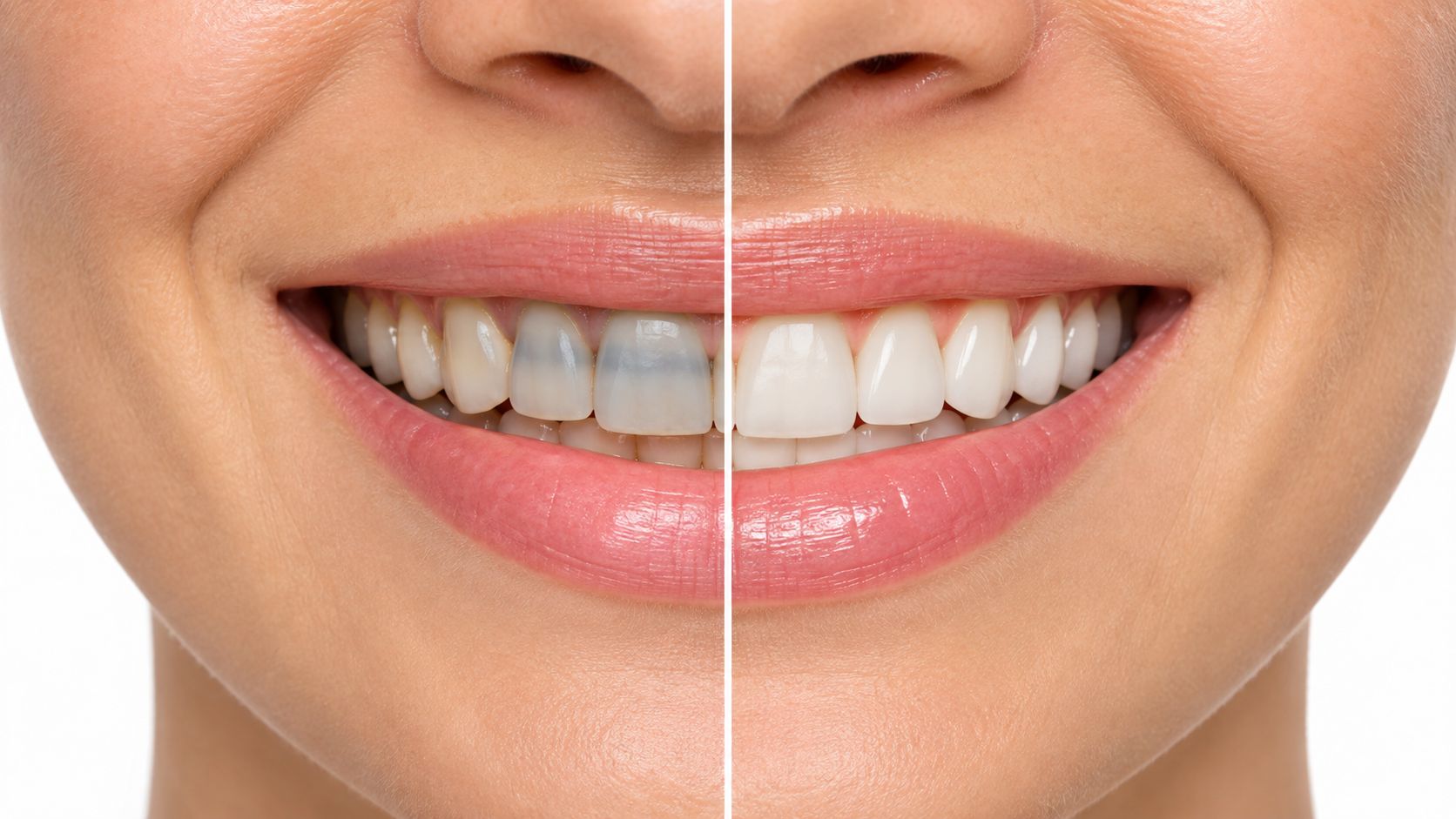
What the before photo cannot tell you
Say a patient has grey banded upper front teeth. We'd examine enamel, old fillings, gum position and bite, then discuss whitening first because it preserves tooth structure. If a trial isn't likely to mask banding, six upper veneers might be planned after shade matching in natural light. Another scenario is fluorosis mottling on front teeth, with whitening reserved for back teeth that won't receive veneers.
Shade order matters. Veneers don't respond to traditional whitening, although they're designed to resist staining, so we typically whiten natural teeth before final shade selection. Porcelain accounted for 59.27% of the UAE market in 2023, according to Grand View Research's UAE dental veneers outlook, which reflects demand for durable aesthetic change, not a guarantee for an individual smile.
- Try the conservative step first: Ask whether whitening could be enough for your stain type.
- Check shade in daylight: Bring natural light photos and avoid choosing the brightest shade on the guide.
- Plan monitoring: Keep check ups so margins, gums and bite contacts are reviewed over time.
2. Case Example 2 Chipped or Worn Front Tooth After an Injury or Habit (Bonding Versus Veneer)
A chip looks simple in a mirror. Clinically, it isn't. We need to know whether the fracture stays in enamel, exposes dentine, cracks deeper, or involves the pulp, which is the living nerve tissue inside the tooth.
A small corner chip on an upper central incisor with healthy pulp and light bite contact often suits composite bonding. That's tooth coloured resin shaped directly in one visit, and it preserves more natural tooth. Our overview of composite veneers in Dubai covers where resin works well and where it doesn't.
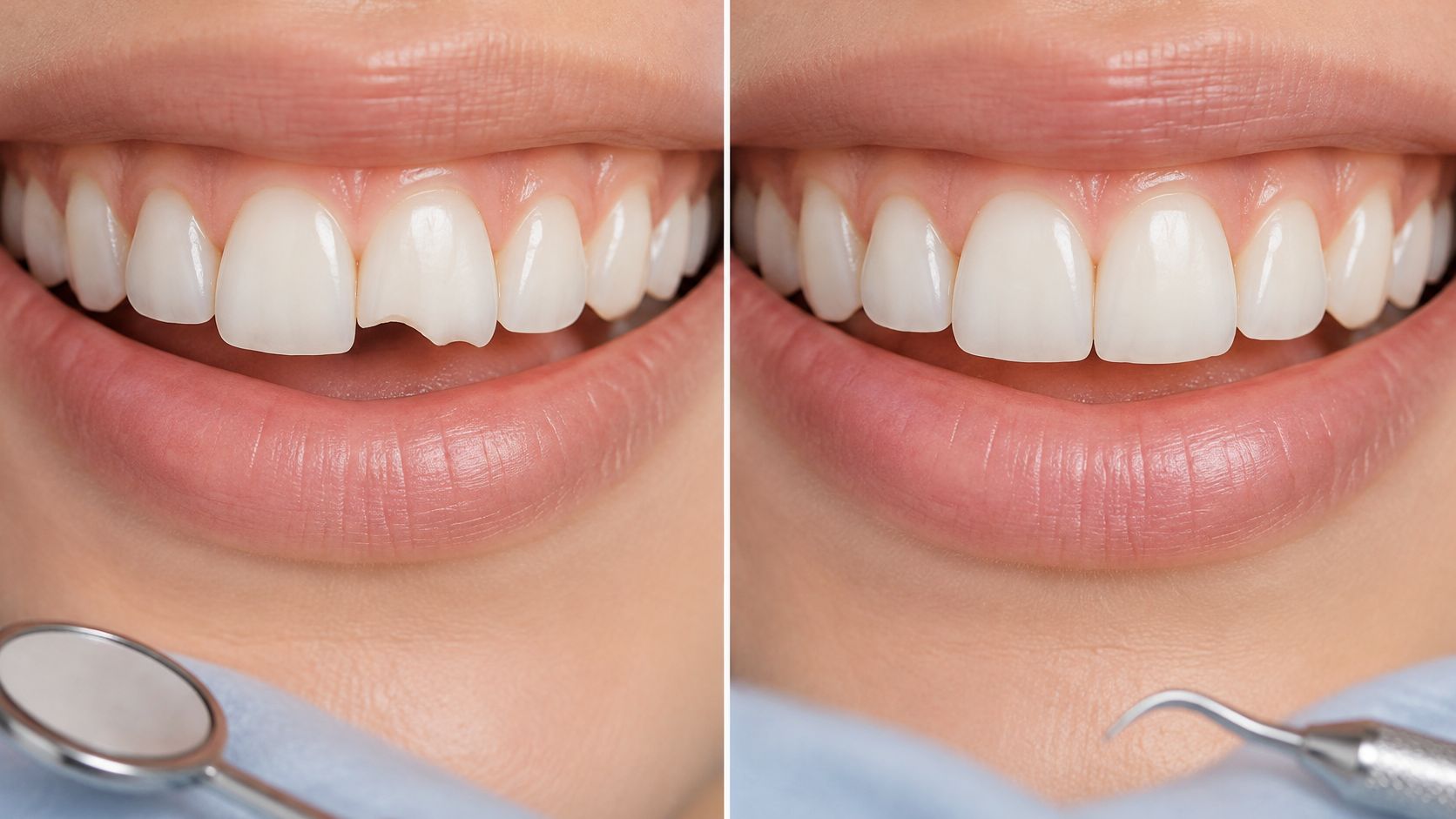
When a veneer or crown is the safer repair
If a canine is fractured across a wider area, already heavily filled, or worn on several surfaces, bonding may chip repeatedly under load. Once we've confirmed the tooth is structurally sound, a porcelain veneer can restore form. If too little sound structure remains, a crown may protect the tooth better than either option.
Material choice is a trade off. Emirates Hospitals' veneers service page describes porcelain as commonly lasting approximately 10 to 15 years with proper care and composite at about 5 to 7 years, while noting composite is easier to repair but stains and wears more readily. Those are estimates, not promises, and bite force changes them.
Practical rule: repair the cause, not just the corner. If grinding, nail biting or opening packaging caused the damage, a new edge placed under the same habit will fail the same way.
Seek assessment promptly after trauma, especially with pain, bleeding, looseness or sensitivity. Bring a broken fragment if it's safe to keep, and ask about a night guard if wear facets suggest clenching.
3. Case Example 3 Small Gaps Between Front Teeth (Veneers Versus Orthodontic Options)
A narrow gap between the two upper front teeth is called a diastema. Veneers close it by making each tooth look slightly wider. That works only within limits, because teeth that become too wide look square, crowd the gum papilla, and can trap plaque at the contact.
We first rule out causes a veneer can't fix. These include a strong lip attachment pulling between the teeth, missing or small side teeth, tongue thrust, and a bite that's pushing teeth apart. If alignment is the problem, moving teeth is more honest than disguising them.
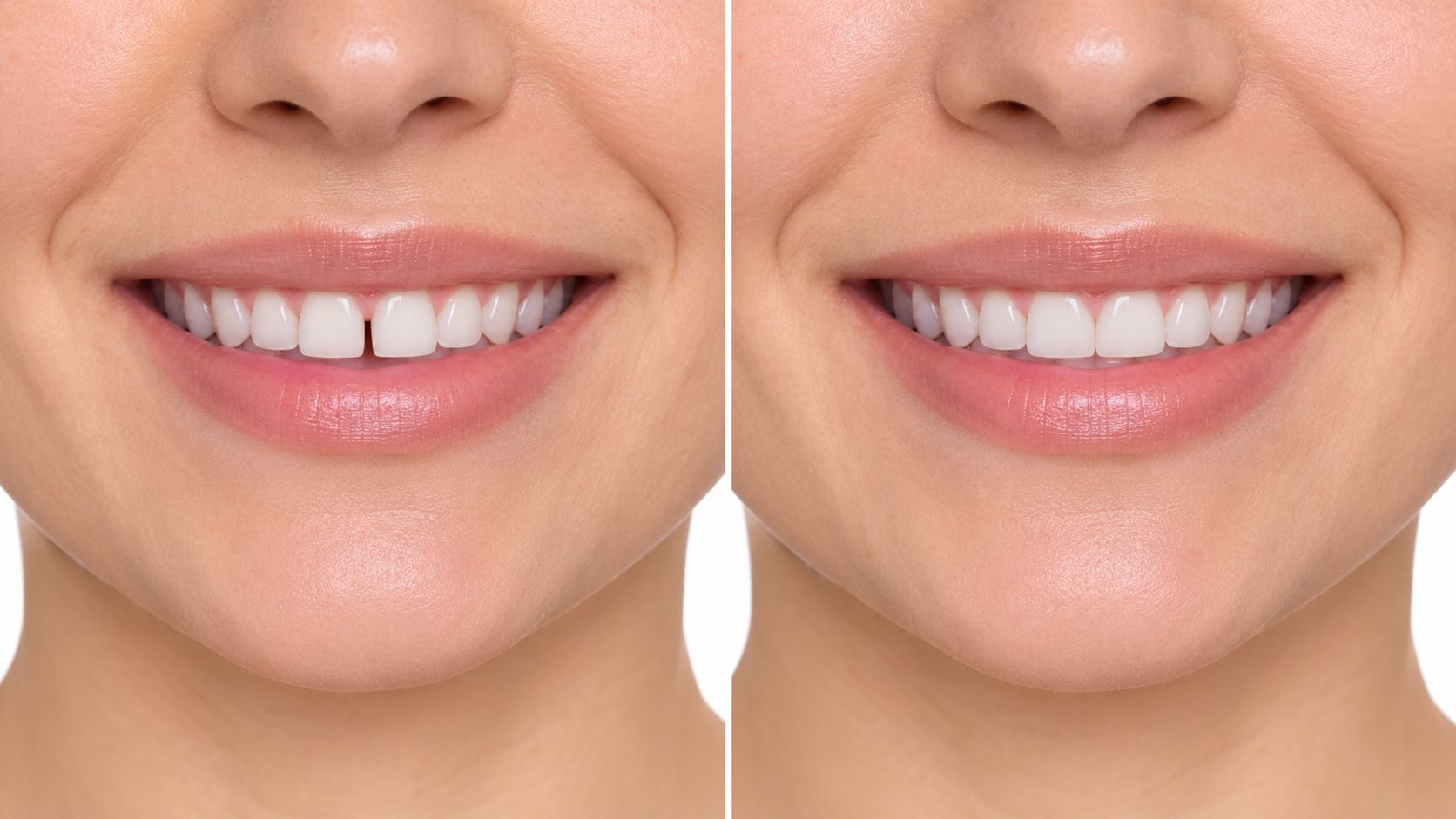
Two different gap scenarios
Say the gap is narrow, tooth proportions allow slight widening, and gums are healthy. Composite or porcelain veneers may close the space after a mock up confirms the teeth won't look bulky. Compare that with a larger gap plus crowding elsewhere. There, clear aligners or ceramic braces would usually come first, then we'd reassess whether any cosmetic restoration is still needed.
A documented Dubai case closed an upper anterior diastema and harmonised shade, but Polyclinic.ae's smile makeover case report combined veneers, crowns and whitening over a reported 4 days, so it isn't a universal timeline. It also shows why neighbouring teeth should be whitened before final ceramic shade is chosen.
- Preview width: Ask for a diagnostic mock up before committing to wider teeth.
- Discuss orthodontics openly: Moving teeth can preserve enamel and improve bite contacts.
- Name habits: Tell us about tongue thrust or thumb sucking, past or present.
4. Case Example 4 Small or Irregularly Shaped Teeth (Peg Laterals and Uneven Edges)
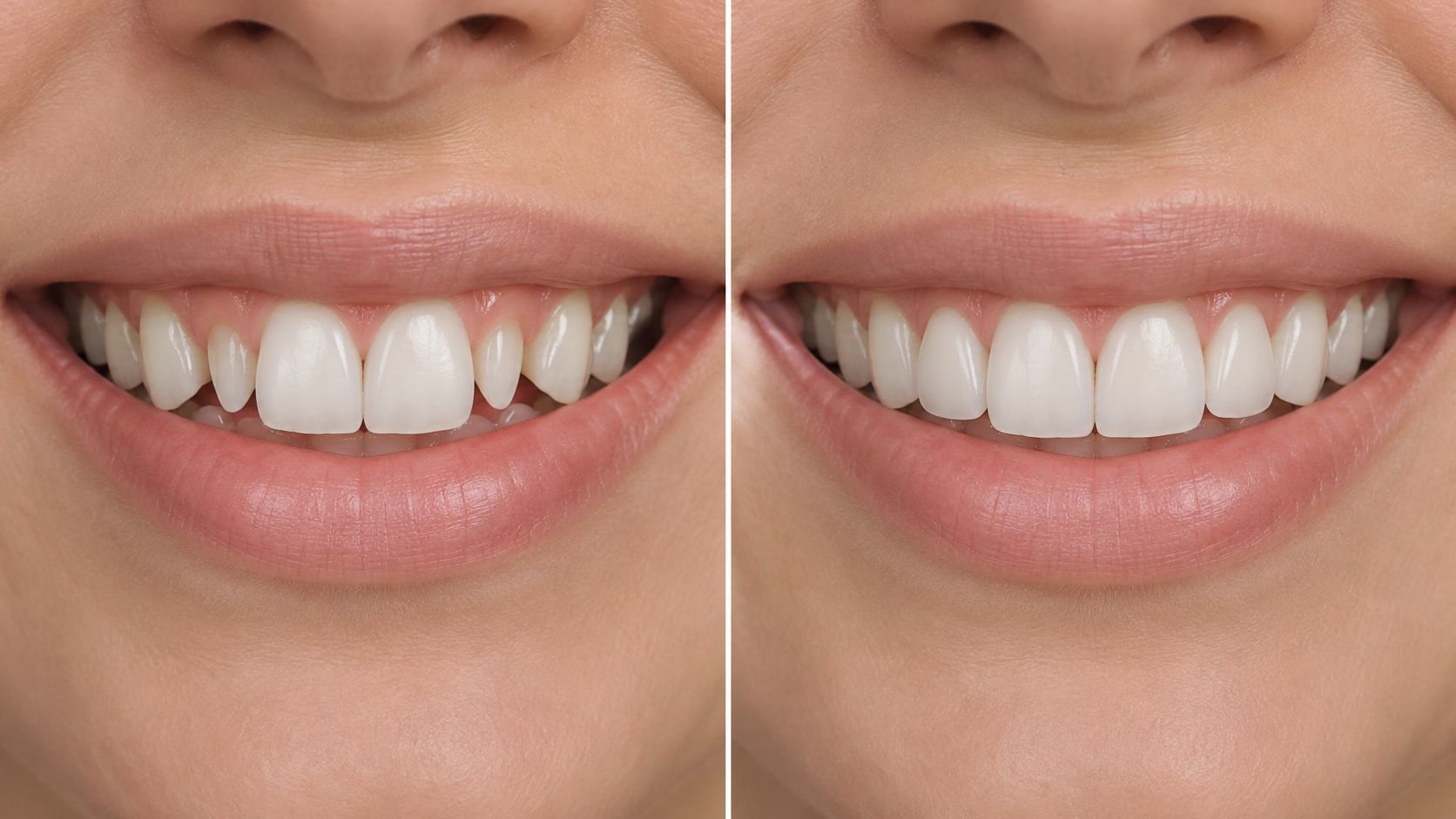
Peg laterals are small, pointed lateral incisors, the teeth beside your two front teeth. Alignment can be good, yet the smile still looks uneven because those teeth are too narrow or short compared with the central incisors.
This is one of the clearer veneer indications, provided enamel and gums are healthy. A veneer can add width and length where nature left too little tooth, rather than only covering a defect. Planning starts with measurements of width to length ratio, lip line, gum symmetry and how much tooth shows when you speak.
What we'd preview before bonding
Say both peg laterals need reshaping. We'd use photographs and a trial smile so you can judge length and roundness on your own face, not on a model. Another scenario is uneven edges after minor wear, where veneers are considered only after we've checked that the gum line is stable and not inflamed.
Bonding substrate matters for longevity. A 2024 systematic review and meta-analysis reported approximately 99% veneer survival when ceramic veneers were bonded to enamel, compared with approximately 91% when severe dentine exposure was present, as summarised in Khalid Al Etaibi's review of veneer evidence citing the Journal of Prosthetic Dentistry. That's why I favour preserving enamel during preparation whenever the design allows.
Ask directly how much natural tooth will be reduced. If enamel is removed, that step isn't fully reversible, and the tooth will need a restoration long term. Bring photos you like, but expect us to translate them into proportions that suit your face.
5. Case Example 5 Worn Enamel From Grinding or Acid Exposure (Restorative Veneers and Protection)
Worn front teeth look short, flat, yellow at the centre and translucent at the edges. Patients often ask for veneers to restore length. My first question isn't about shade. It's about why enamel disappeared.
Bruxism, which is grinding or clenching, creates matching flat facets and morning jaw tension. Acid from reflux, frequent citrus drinks or soft drinks softens enamel, then brushing removes it faster. Placing veneers onto an active wear process risks chipping, debonding and sensitivity.
Stabilise first, restore second
Say upper front teeth are worn and you wake with headaches. We'd assess bite, jaw muscles and existing cracks, then fit a night guard and confirm the bite is stable before veneers are considered. In an acid erosion scenario, we'd discuss diet timing, reflux referral where appropriate, gentle brushing with a soft brush, and waiting after acidic drinks before brushing.
A veneer consultation should start with tooth structure, decay, gum health and bite, because veneers can't treat an untreated cavity or infected pulp, as explained in Dental Nation's guide to veneer risks and alternatives. Teeth exposed to heavy grinding may need bite management first, and some worn teeth need crowns or other restorative care instead.
A beautiful immediate result can hide an unmanaged bite problem for a few months. It cannot protect ceramic from nightly grinding forces indefinitely.
After restoration, protection continues. Wear the guard as advised, attend reviews for early chips or loosening, and report new sensitivity, rough margins or a bite contact that suddenly feels high.
6. Case Example 6 Multiple Teeth Uneven in Shape, Shade, and Spacing (Smile Makeover Planning)
When colour, length, chips and small spaces all bother you at once, treating one tooth can make the rest look worse. A staged smile makeover may combine whitening, bonding, orthodontic alignment and veneers on selected upper front teeth. Our smile and design planning guide outlines how those stages are sequenced.
The video below is useful background before your consultation, but it doesn't replace examination of your own bite and gums.
How a combined plan is built
Say a patient has mixed shades, chipped edges and small gaps. We'd photograph and scan the smile, treat decay or gum inflammation first, whiten natural teeth, then use a wax up and mock up to test shape and length. Minor changes at mock up stage are normal, and they're far easier than changes after final bonding.
A Dubai rehabilitation used digital scanning, photographic analysis, a diagnostic wax up and mock up, then veneers with gingival contouring and posterior crowns, according to Polyclinic.ae's esthetic and functional rehabilitation case. Because treatment was combined, its before and after change can't be credited to veneers alone.
Long term, maintenance decides value. A synthesised cosmetic dentistry report cites a 95.5% cumulative 10 year survival rate for porcelain laminate veneers, via EpidAur's cosmetic dentistry quality rankings, alongside satisfaction of approximately 80% to 100% in clinical studies. Survival still allows for polishing, repair or refinement, so ask for the review and replacement pathway in writing.
How the six veneer case types differ in concern, options, and preparation
| Item | Main Concern | Options Considered | Tooth Preparation | Key Consideration |
|---|---|---|---|---|
| Case Example 1: Deep Staining That Does Not Respond to Whitening | Intrinsic staining that whitening may not fully remove | Whitening; porcelain veneers | Usually limited enamel removal; generally irreversible | Assess enamel, staining, bite, and shade expectations |
| Case Example 2: Chipped or Worn Front Tooth After an Injury or Habit | Chipped or worn tooth; possible cracks or nerve involvement | Composite bonding; porcelain veneer; crown if needed | Bonding is usually conservative; veneers require some preparation | Promptly assess fractures and check tooth structure and bite |
| Case Example 3: Small Gaps Between Front Teeth | Gaps between front teeth and possible alignment concerns | Veneers; clear aligners; ceramic braces; combined treatment | Veneers may require preparation; orthodontics moves teeth without changing their structure | Veneers can make teeth look wider and do not correct bite problems |
| Case Example 4: Small or Irregularly Shaped Teeth | Peg-shaped or uneven teeth affecting smile proportions | Porcelain veneers; mock-up or wax-up preview | Some enamel removal is often permanent | Plan shape and symmetry with lip position, gum line, and smile arc in mind |
| Case Example 5: Worn Enamel From Grinding or Acid Exposure | Worn, sensitive teeth and ongoing grinding or acid exposure | Restorative veneers; night guard; dietary or reflux management | Preparation may be more involved when enamel is thin | Manage the cause of wear and protect restorations, often with a night guard |
| Case Example 6: Multiple Teeth Uneven in Shape, Shade, and Spacing | Several concerns affecting overall smile harmony | Porcelain veneers; whitening; bonding; orthodontic alignment; staged makeover | Multiple veneers generally involve irreversible preparation | Use a mock-up and written plan; review timeline, maintenance, and alternatives |
Planning Your Own Veneer Consultation in Deira
A veneer consultation should connect the visible concern to a diagnosis, suitable alternatives, and a maintenance plan. When reviewing dental veneers before and after images, ask what was diagnosed, which options were considered and why, and what care the result may need. Photos can show changes in appearance, but they cannot establish tooth health, bite function, preparation depth, or whether the same approach suits you.
Dubai consent standards support asking for clear information before treatment. The Dubai Health Authority veneer consent circular requires discussion of treatment details, risks, benefits, alternatives, expected outcomes, and costs. Ask how much enamel may be removed, whether temporary veneers are included, how concerns about shade or shape will be handled, and what repair may involve.
Cost matters because cosmetic dentistry is largely elective in the UAE. TechSci Research's UAE cosmetic dentistry market analysis reports that cosmetic services are generally excluded from mandatory insurance and that the basic plan's reported annual dental cap is AED 500. Compare the proposed treatment and possible maintenance or replacement, not only the cost per tooth. Ask for a written plan covering the number of teeth, material, laboratory work, whitening, any guards, and preliminary treatment.
Questions patients ask us most
- How long will veneers last? With proper care and good oral hygiene, they can last between ten and fifteen years before requiring replacement or maintenance. Grinding, trauma, and gum changes may affect how long they remain suitable.
- Can I whiten my teeth later? Natural teeth can be whitened, but veneers do not change shade and resist staining. Whitening is typically performed before veneer placement so the shade can be matched consistently.
- What if a veneer chips? Contact the clinic for an assessment. Polishing, repair, or replacement may be considered depending on the damage.
- Are veneers reversible? Veneers may require enamel preparation, which cannot be undone. Discuss this trade-off before consenting.
At Yoyime Clinic in central Deira, Dubai, a veneer assessment includes evaluating tooth shape, size, alignment, and colour. Measurements, photographs, and impressions or digital scans may also be taken to help design veneers. Bring your questions and request a written plan that sets out alternatives, timelines, and aftercare.
Yoyime Clinic offers a dental consultation to assess your teeth, gums, and bite before a cosmetic plan is confirmed. Use the appointment to discuss realistic outcomes, maintenance, and costs, then consider which option fits your clinical needs.