


You've probably stood in front of the bathroom mirror, noticed coffee staining or a general yellow tone, and wondered whether a shop-bought strip is really the same thing as a dentist-prescribed tray. It isn't the same decision at all. Teeth whitening trays are a gradual, controlled option that uses peroxide gel in a custom or semi-custom appliance, and the central question for many Dubai patients is not just “Will it whiten?” but “Will it fit my teeth, my sensitivity level, and my existing dental work?”
If you're comparing options in Deira or anywhere else in Dubai, it helps to think beyond the product box. A useful outside reference on home whitening is the overview of whitening treatments at Littleover, because it shows how much the result depends on planning, not just the gel itself. The rest of this guide focuses on what trays do, how dentist-prescribed trays differ from over-the-counter versions, and why crowns, veneers, and fillings can change the order in which you whiten.
Table of Contents
- Why Teeth Whitening Trays Are Worth a Closer Look
- What Teeth Whitening Trays Actually Do
- Custom Trays vs Over-the-Counter Options
- Fitting and Using Whitening Trays Step by Step
- Benefits and Limitations You Should Know About
- Maintenance, Aftercare, and Long-Term Results
- The Sequencing Question Most Guides Skip
- FAQs and When to Book a Consultation
Why Teeth Whitening Trays Are Worth a Closer Look
A patient in Deira might notice one front tooth looking darker in a selfie, then spot a drug-store kit online and assume all whitening works the same way. It doesn't. Teeth whitening trays are designed for repeated use over several days or weeks, so the outcome is built through planned daily wear rather than a single dramatic appointment.
That matters because whitening is partly a timing question. UAE reporting has described custom tray wear as taking place for around two hours a day or overnight, with visible change often starting after about one week, which is very different from a one-off cosmetic purchase. For patients who want control over when they wear the gel, trays can be more practical than a chairside session, especially if they need to work around sensitivity, travel, or family schedules. The in-office whitening duration from Dr. Wiitala is a useful comparison point for understanding how treatment speed changes depending on the route.
Why this matters before you buy anything
The first question is not whether whitening exists, it's whether your teeth are even suitable for the type you're choosing. A tray can be a good option when you want gradual change and a structured plan, but it won't change the shade of restorations, and it shouldn't be treated like a random retail accessory. In practice, that means the consultation matters more than the packaging.
Practical rule: if your smile has visible fillings, veneers, or crowns, you need a plan before you start whitening, not after.
A dentist-led discussion also helps set realistic expectations. Some people finish a course and want to extend it immediately, but the better question is whether the underlying tooth colour, enamel condition, and restoration history support that course in the first place. That's the conversation patients in Deira should bring to the chair, rather than asking which box to add to a cart.
What Teeth Whitening Trays Actually Do
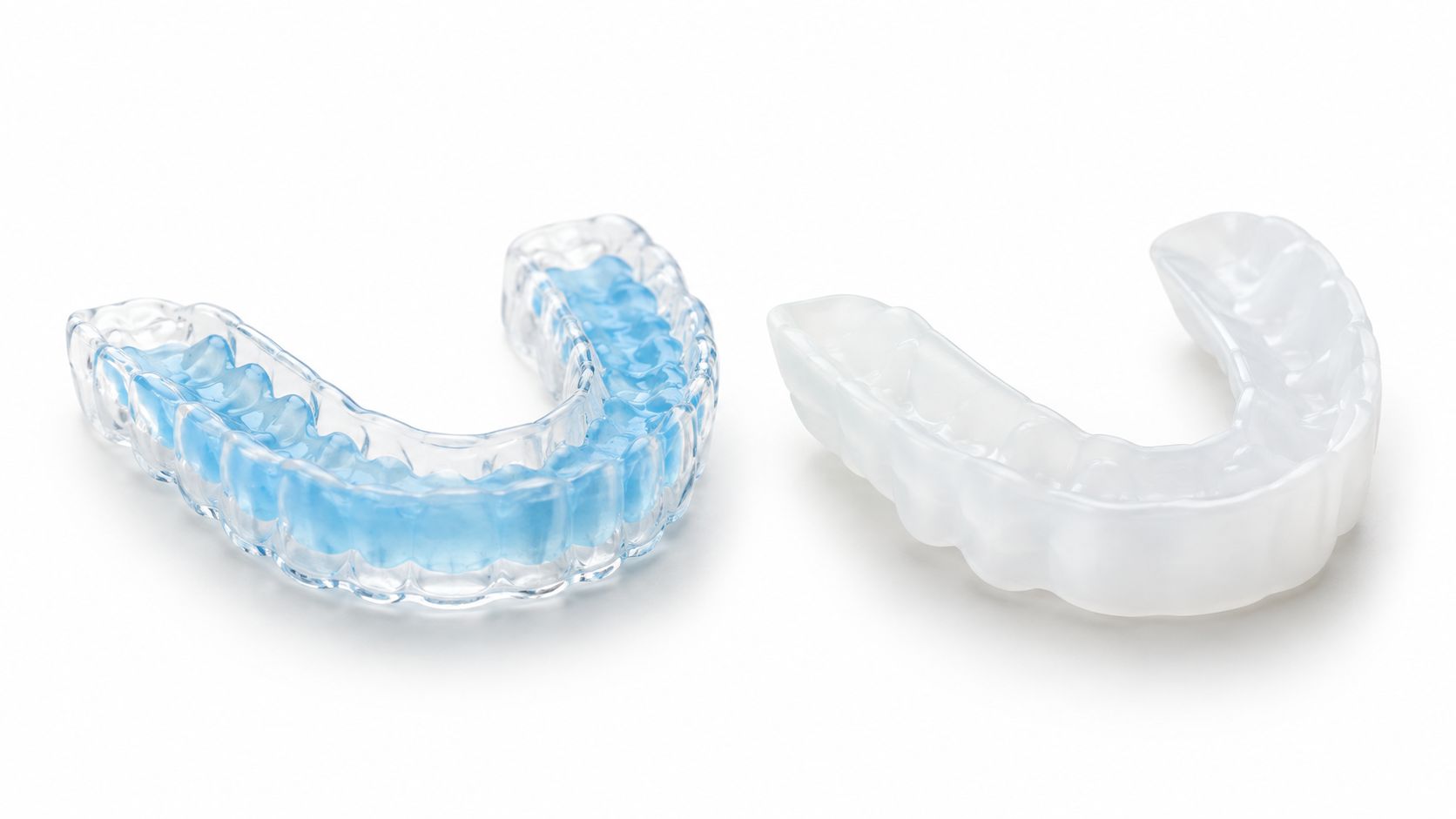
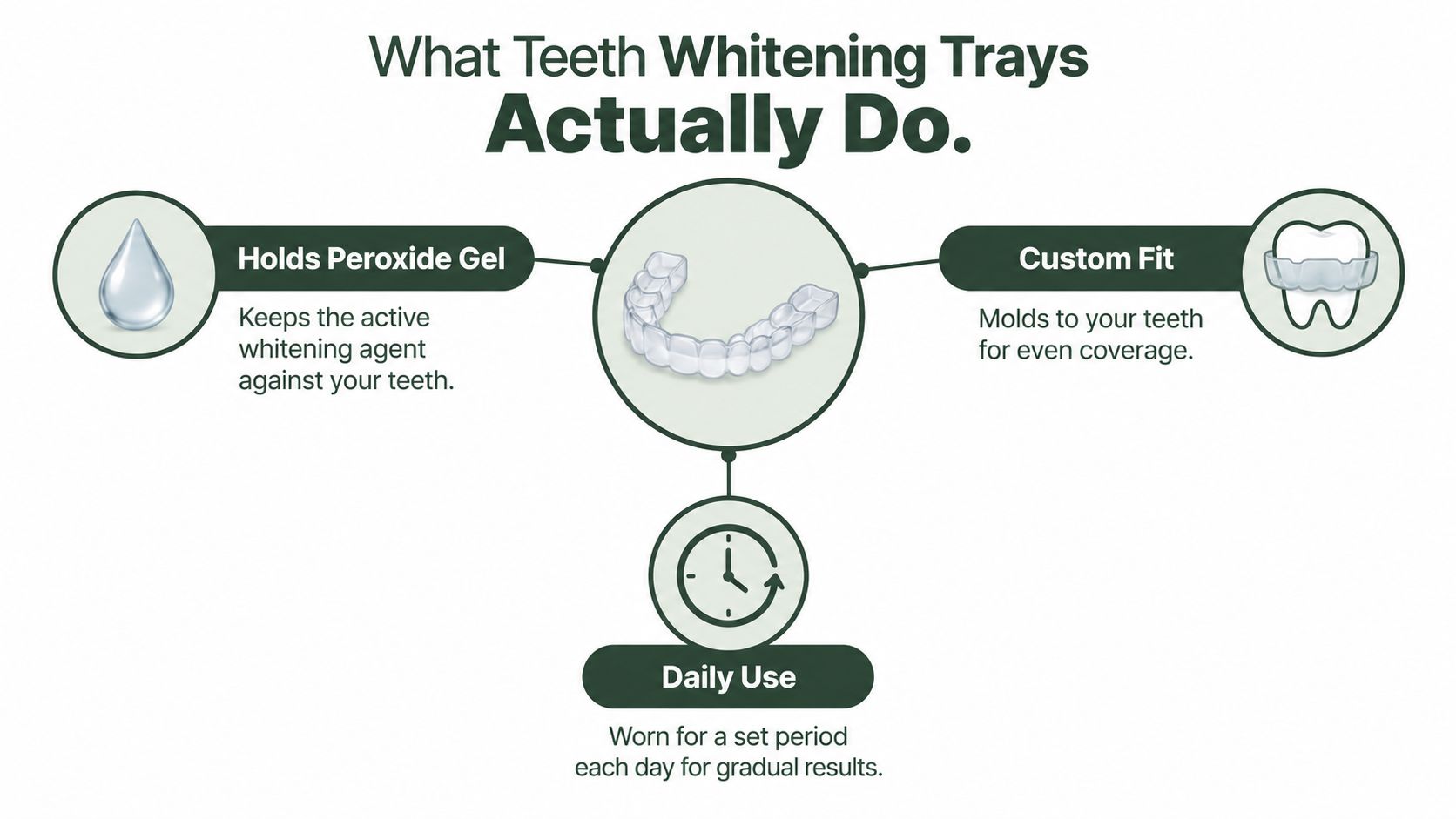
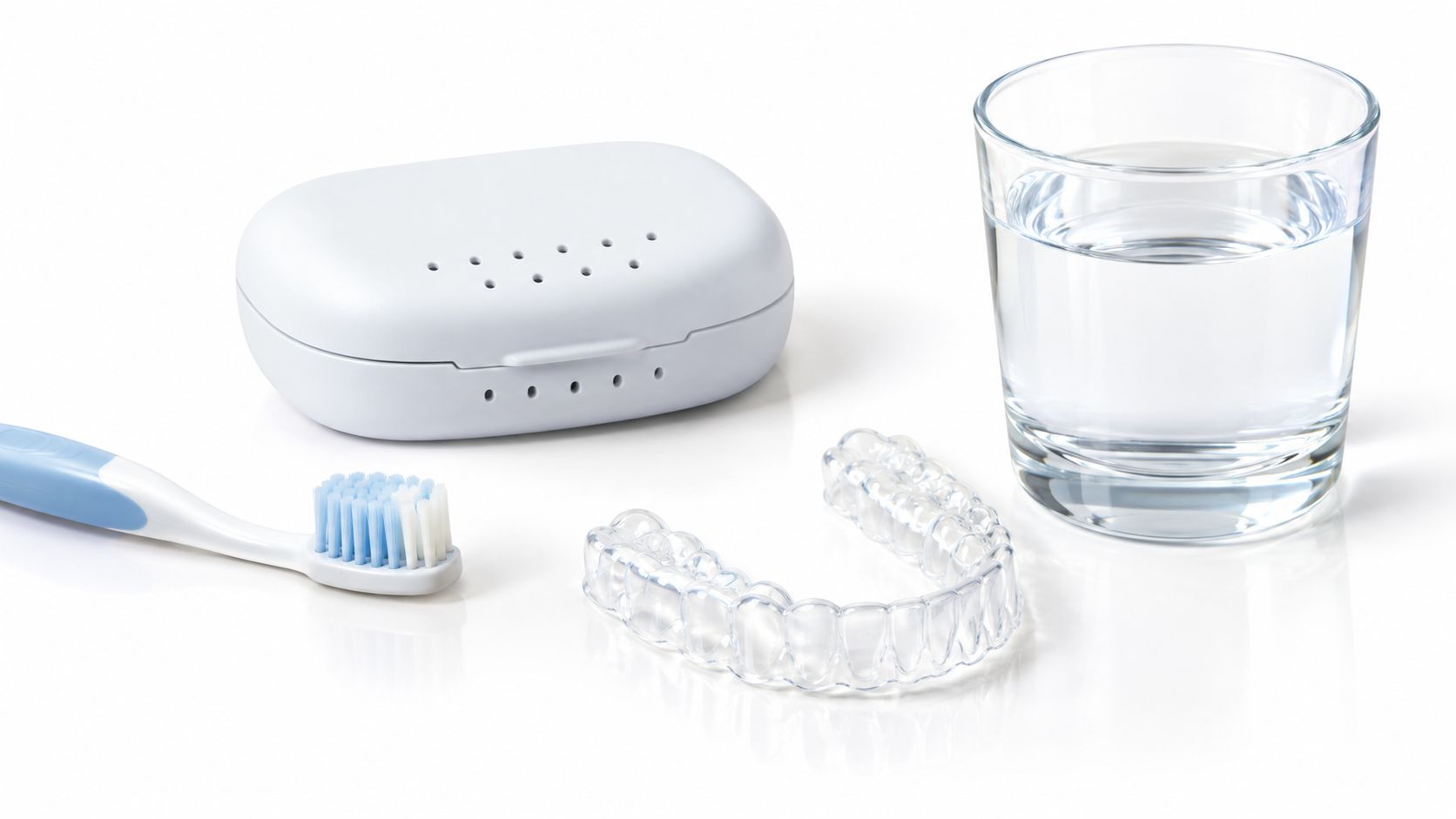
A whitening tray is a thin, mouthguard-like appliance that holds peroxide gel against your teeth for a set period. The tray keeps the gel in place long enough to work on stains within enamel and dentine, instead of letting saliva wash the material away too quickly.
How the chemistry works in plain language
Most professional tray systems use carbamide peroxide, which breaks down into hydrogen peroxide. The active ingredient moves through the surface layers of the tooth, so the colour change happens in natural tooth structure rather than as a coating on top. The tray works like a sponge holding gel against the teeth, only here the goal is repeated contact with the stained surface.
Fit matters because the tray controls where the gel goes. A close-fitting tray keeps more gel on the teeth and less on the gums, while a poor fit can let the material spread into soft tissue and cause irritation. Dubai Municipality guidance places consumer products with no more than 0.1% hydrogen peroxide in one category and products above that level in another that needs professional involvement, so compare whitening treatments before choosing a route. Concentration changes the regulatory category of the product altogether, which is why the 0.1% line matters.
What trays can and can't change
Trays can lighten natural enamel and dentine, but they do not change the colour of crowns, veneers, bridges, or composite fillings. That is the part many readers miss, because the visible improvement can make the smile look brighter while also making restorations stand out more clearly.
Whitening can improve the teeth you already have, but it can't rewrite the shade of materials that were placed earlier.
That distinction matters clinically as well as cosmetically. If the front of the smile already includes restorative work, the whitened teeth may no longer match those older materials, and the timing of any replacement needs to be planned before you start. In that sense, concentration and fit are only part of the decision. The sequence of treatment matters too, especially when you are comparing tray care with the in-office whitening duration from Dr. Wiitala.
Custom Trays vs Over-the-Counter Options
The comparison that matters comes down to predictability. Custom dentist-prescribed trays are made from impressions or digital scans, while over-the-counter choices rely on one-size-fits-most designs, pre-filled trays, strips, or boil-and-bite mouthguards. Custom trays keep the gel in closer contact with the tooth surface and away from the gums, which helps the whitening gel work where it should.
That difference is practical, not abstract. A tray that fits closely behaves like a well-made mould, while a generic one can leave gaps, let gel leak, and create uneven contact. For readers who are still weighing compare whitening treatments, fit is one of the clearest points of separation.
Dubai guidance and regional reporting place professional take-home tray courses within a gradual model, with wear times often ranging from about 30 minutes to two hours, or overnight in some protocols, and prices in the UAE varying by package and what's included. If you want a local service overview, the Professional Teeth Whitening in Dubai page covers this treatment family in more detail.
Side by side
| Factor | Custom dentist-prescribed trays | Over-the-counter trays |
|---|---|---|
| Fit | Made to your teeth, so gel contact is more controlled | Generic fit, so leakage and uneven contact are more common |
| Gel strength | Professional-strength peroxide under supervision | Usually lower or less controlled strength |
| Supervision | Dentist checks suitability, fit, and progress | Little or no clinical oversight |
| Comfort | Better adaptation to tooth shape and gum line | More likely to rub, leak, or feel bulky |
| Treatment timing | Usually a planned daily schedule | Often fixed by the product, not by your mouth |
| Sensitivity control | Can be adjusted by the dentist if needed | You're largely adjusting on your own |
| Price | UAE reporting places professional tray treatment in broad ranges depending on what's included | Usually cheaper upfront, but varies by brand and format |
Custom trays are not automatically the right answer for everyone, but they are more predictable on uneven tooth surfaces and around the gum line. Over-the-counter systems can still whiten, especially on straighter, stain-prone teeth, but the result is usually less controlled. The simplest way to choose is to ask whether you want convenience alone or convenience with supervision.
What the price really covers
In Dubai, the package may include impressions or digital scanning, tray fabrication, gel syringes, fitting checks, and follow-up. That is why two whitening offers can look similar at first glance and still be very different clinically. A lower sticker price does not always mean better value if the tray leaks, feels uncomfortable, or needs replacement later.
Fitting and Using Whitening Trays Step by Step
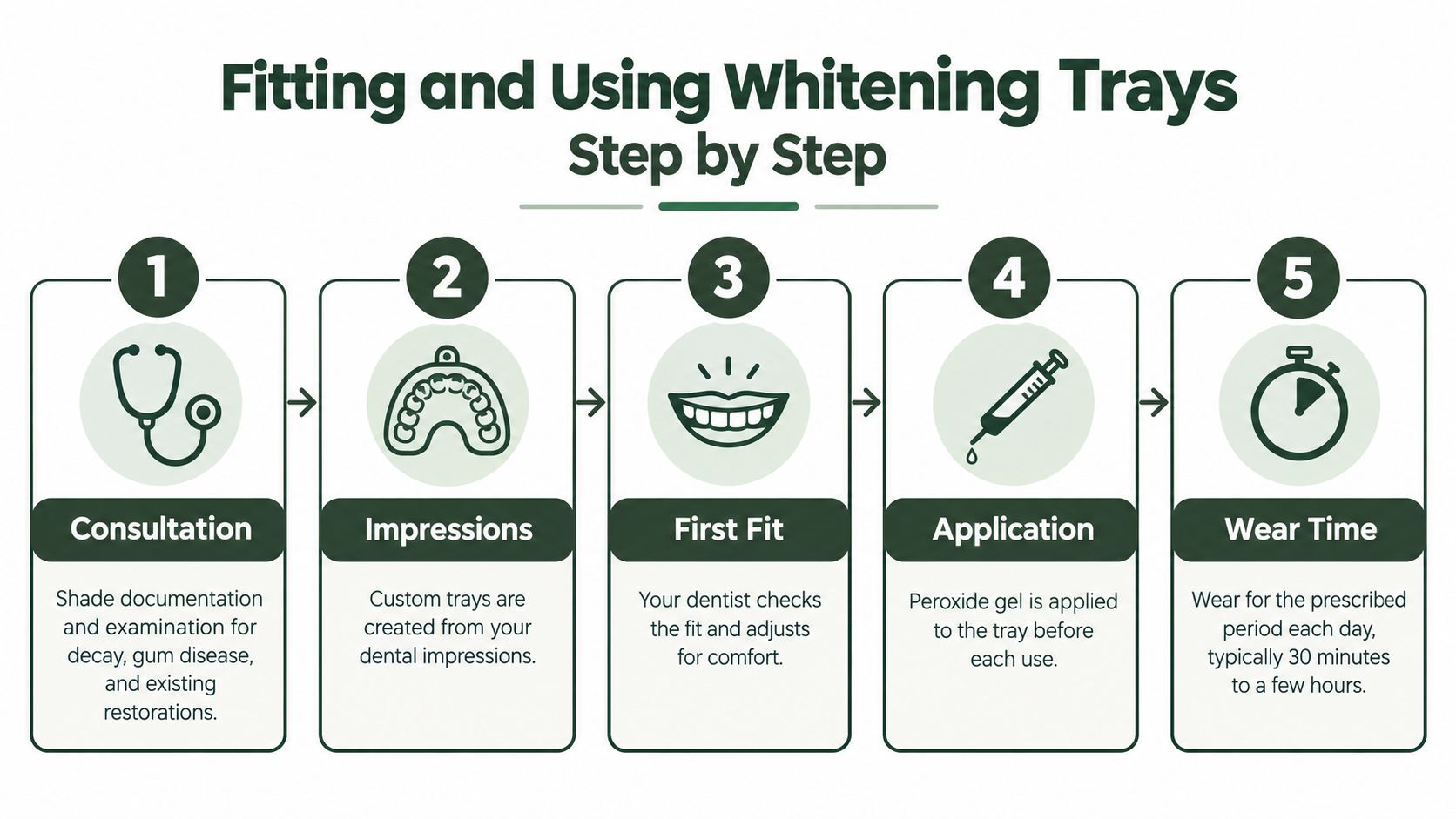
The process usually starts with a consultation, not a tray. The dentist checks the current shade, looks for decay or gum disease, and reviews restorations before deciding whether whitening is appropriate. If the mouth is suitable, impressions or digital scans are taken and the trays are made to match the arches closely.
When the trays come back, the dentist checks that they seat properly without pressing on the gums. That fitting step matters because excess pressure or overextension can create irritation before the first dose of gel is even used. A useful companion read on the basics of mouth care before cosmetic treatment is the professional teeth cleaning guide, because a clean surface makes shade assessment more reliable.
The daily routine
- Brush first. Clean tooth surfaces let the gel contact the enamel more evenly.
- Place a small amount of gel. A small dot in each tooth compartment is enough.
- Seat the tray gently. Press it into place without squeezing extra gel onto the gums.
- Wear it for the prescribed time. Regional Dubai guidance commonly places this in the daily range of about 30 minutes to a few hours, depending on the formulation.
- Rinse and clean afterwards. Remove any residue from the teeth and the tray before storing it.
Common mistake: adding more gel does not make whitening faster, it usually just increases the chance of gum irritation.
The other errors are just as common. People sleep in trays when they haven't been told to, eat or drink while wearing them, or assume the upper and lower arches need different timing. A dentist will also remind you that visible change often begins after roughly a week, while the full course may run within a one-to-four-week window depending on the formulation and wear schedule.
What to expect in practice
A gradual course is normal. Trays are designed for repeated use, so the result builds over days rather than minutes. If sensitivity appears, the dentist can adjust the timing instead of asking you to force through discomfort.
Benefits and Limitations You Should Know About
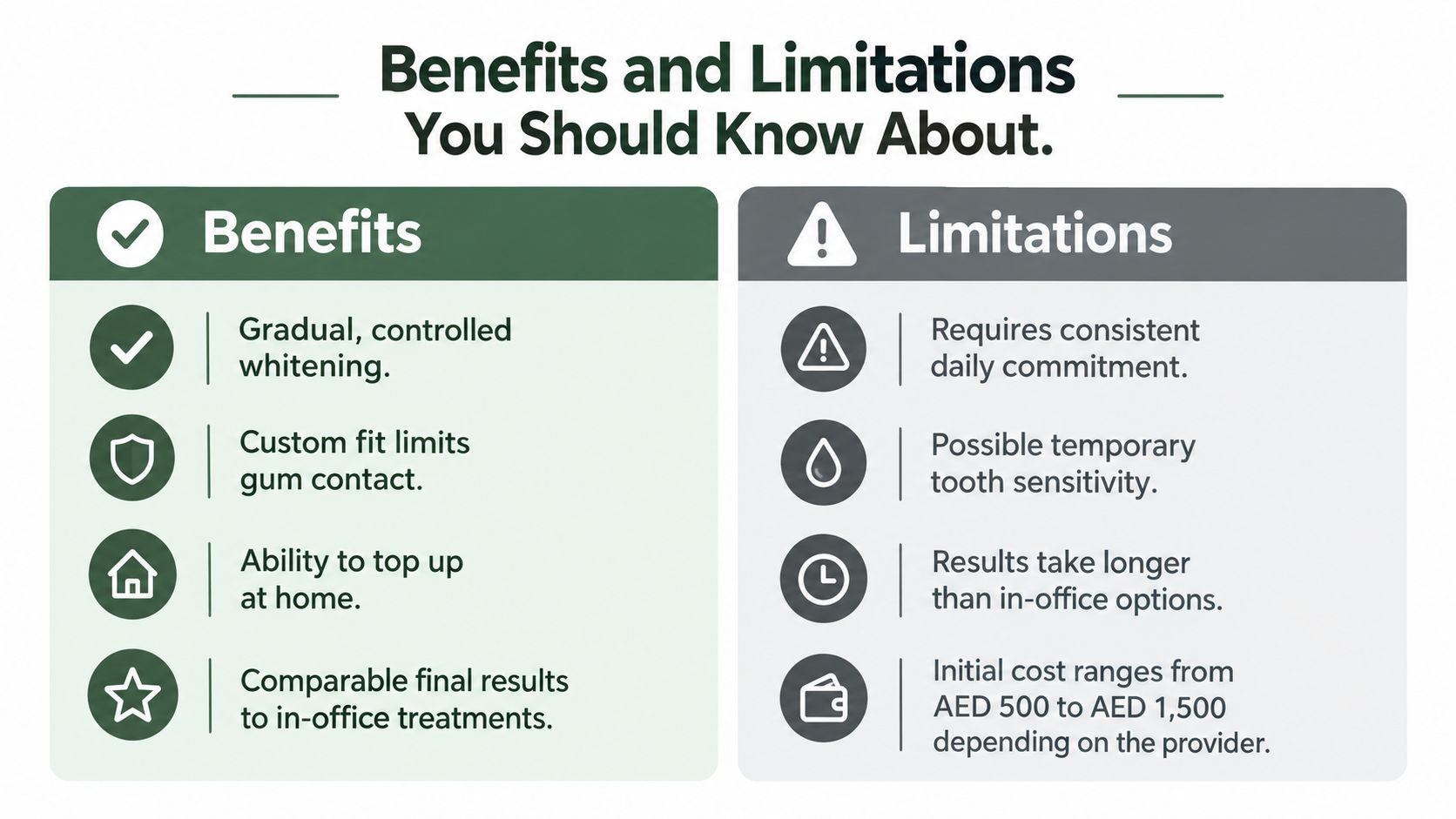
A tray whitening course can fit neatly into daily life. You wear the gel on your own schedule, and a custom tray helps keep the whitening agent on the tooth surface instead of spreading across the gums. For many patients, that balance of control and oversight is the main reason trays remain a standard home option.
The upside
The practical advantage is flexibility. You do not need to book a chairside visit for every session, and a dentist can adjust the routine if your teeth start to feel tender. In the right hands, take-home trays can also produce a final colour change comparable to in-office whitening once the full course is finished.
The trade-offs
The main drawback is that whitening takes patience. Teeth whitening trays work through steady, repeated use rather than a single dramatic session, so the result builds gradually. Temporary tooth sensitivity and gingival irritation are the common dose-limiting effects, especially if gel is overfilled or the tray touches soft tissue. If sensitivity is already an issue, a dentist can discuss a gentler approach, and teeth whitening for sensitive teeth explains that topic in more detail.
Restorations are part of the planning, too. Fillings, bonding, crowns, veneers, and bridges keep their original shade, so visible restorative work may need to be timed around whitening rather than handled after the fact.
Practical rule: if the smile includes visible restorative work, treat whitening as a sequencing decision.
The consumer market can make whitening sound simple, but the UAE regulatory setting is more structured than that. Products above the general consumer hydrogen peroxide threshold require professional involvement, and that helps reduce the risk of poor fit, overuse, and soft-tissue irritation. A dentist can also decide whether a custom tray is the safer route, since custom trays usually give better control when sensitivity is a concern than over-the-counter options.
Maintenance, Aftercare, and Long-Term Results
The tray itself needs the same kind of care you'd give any custom dental appliance. Rinse it with cool water after use, clean it gently with a soft brush if needed, and keep it in a ventilated case so it can dry properly. Hot water can warp the fit, and a warped tray is more likely to leak gel onto the gums.
Your habits matter just as much as the appliance. Rinsing after coffee, tea, and dark sauces helps reduce new staining, and using a straw for staining drinks can reduce direct contact with the front teeth. If you smoke or vape, it's wise to avoid doing so during the active whitening phase and to discuss maintenance expectations with your dentist.
How touch-ups usually work
Many don't need to repeat the full programme every time they want a refresh. A short top-up course is often enough when the shade starts to drift, especially if the original trays still fit well. That's one reason take-home trays are useful, you already have the appliance ready for maintenance rather than starting from scratch.
When to pause and call the dentist
- Sharp sensitivity: if the pain is strong or doesn't settle, the schedule needs review.
- White or sore gum patches: this can mean the gel is reaching soft tissue.
- Tray no longer seats properly: a poor fit can mean the appliance has distorted or your bite has changed.
If a problem starts, stronger gel or longer wear is not the answer. The dentist can shorten wear time, change the concentration, or check whether decay or gum inflammation is part of the problem.
The Sequencing Question Most Guides Skip
A lot of people think whitening is the first step in a smile makeover because it feels like the easiest one. The catch is that crowns, veneers, composite fillings, bridges, and bonding do not change shade with peroxide, so whitening natural teeth first can leave restorations looking darker or more obvious beside them. That's why the order matters.
A patient can spend two weeks wearing trays, feel pleased with the brighter result, and then suddenly notice that a front veneer looks flat or yellow beside the newly whitened teeth. That isn't a tray problem, it's a planning problem. The right sequence is to identify visible restorations, document the starting shade, decide whether the colour issue is external staining or something intrinsic, whiten the natural teeth first, then reassess whether any restorations need replacement or remaking.
Clinical point: whitening before new adhesive cosmetic work is usually the safer sequence, because bleaching temporarily reduces bond strength.
That timing detail matters if you're planning veneers, bonding, or a broader smile makeover in Dubai. A dentist in Deira can help you decide whether whitening is the first step or whether restorations need to be adjusted afterwards so the final smile looks coherent rather than patchy. The advantage of professional planning is that it prevents you from whitening one part of the smile while ignoring the part that sets the visual tone.
FAQs and When to Book a Consultation
Are whitening trays safe during pregnancy? Most dentists avoid elective whitening during pregnancy and breastfeeding, so a consultation is the right first step. What if my tray feels tight? Stop using it and ask for a fit check, because pressure points can cause irritation. Do trays work with aligners or retainers? Not usually at the same time, so your dentist should advise on sequencing. How long do results last? It depends on diet, habits, and maintenance, so periodic top-ups are common.
If you're in Deira and want a shade assessment, restoration check, and a personalised plan, book a consultation at Yoyime Clinic next to Salah Al Din Metro Station. Final suitability always depends on a clinical examination and your individual needs.
Yoyime Clinic offers doctor-led dental assessment and custom whitening tray planning in Deira, Dubai, with treatment matched to your teeth, restorations, and sensitivity history. If you're thinking about whitening, veneers, or a broader cosmetic plan, visit Yoyime Clinic to arrange a consultation and discuss the safest sequence for your smile.