


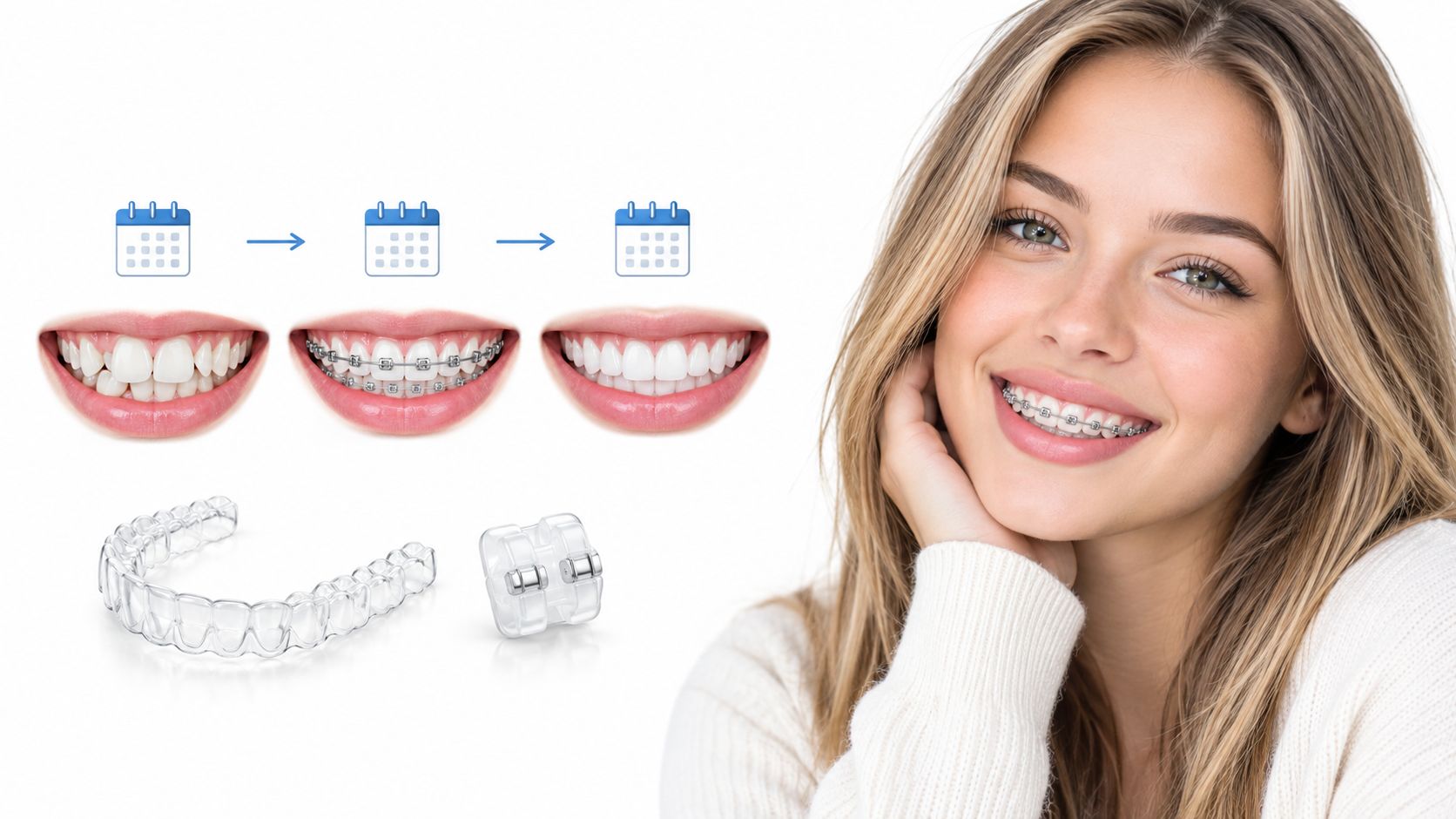
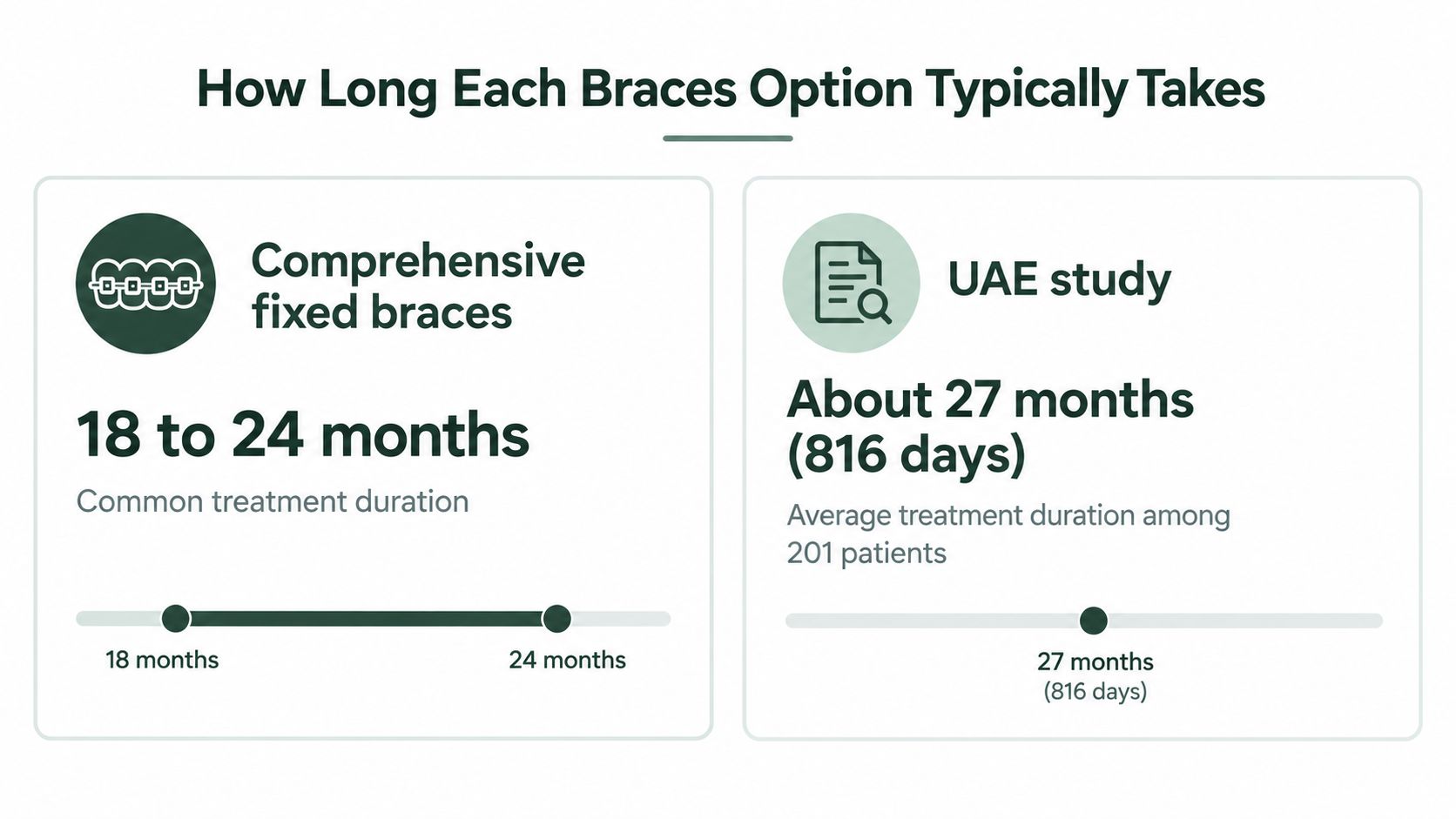
Fixed braces commonly take 18 to 24 months to straighten teeth, while a Dubai study of 201 patients found an average of about 27 months (816 days). Clear-aligner timelines and early orthodontic treatment vary widely by case, and no general estimate can replace an individual assessment.
Those figures describe different treatment groups and don't guarantee when any one person will finish. A smile may look straighter before the full bite and tooth positions are corrected, and retainers come after active treatment to help maintain the result.
Table of Contents
- How Long Each Braces Option Typically Takes
- The Stages That Fill the Treatment Timeline
- Factors That Lengthen or Shorten Your Plan
- What Aligner Timelines Include and Leave Out
- Signs of Progress That Do Not Mean Finished
- Realistic Ways to Keep Treatment on Schedule
- Common Questions About Braces Timelines
- Confirm Your Timeline Before You Start
How Long Each Braces Option Typically Takes
A quoted treatment length only makes sense once you know what the clock is measuring. For full fixed-brace treatment, 18 to 24 months is a common range, and the Dubai study described in the introduction recorded an average of 816 days (about 26.8 months) across 201 patients, with wide variation between individuals. Two years or longer works as a sensible planning figure for full treatment. It cannot tell you when your own treatment will end.
The table below compares active-treatment estimates, meaning the months spent physically moving teeth. Active treatment works a bit like the building phase of a renovation: the refinement work and the retention that follows sit outside the quoted figure, so two timelines of the same length can cover very different amounts of care. Visit schedules also differ. The guidance and research discussed in this article describe review intervals from about three to six weeks, and your orthodontist sets the spacing your treatment needs.
| Option | Typical active treatment | Wider range seen | Visit interval |
|---|---|---|---|
| Traditional metal braces | 18–24 months for full alignment and bite correction | About 27 months average in the Dubai study; some cases run well beyond the average | Every 3–6 weeks |
| Ceramic braces | Similar to metal in many cases | Can run longer when mechanics are limited or brackets break | Every 3–6 weeks |
| Clear aligners | First aligner phase often measured in months; the full plan varies | Depends on refinements, bite correction and daily wear | Aligner change every 7–14 days |
| Interceptive (early) orthodontics | One early phase followed by monitoring, with timing set by growth | A second phase may follow years later if needed | Set by the orthodontist |
These ranges are not a direct comparison of appliances under identical conditions, because each option is usually chosen for different problems. A smaller alignment concern can finish sooner than the full ranges above, and a complex case can run longer. Ceramic brackets may add time in some cases if their mechanics limit movement or breakages interrupt progress. Early treatment for a developing bite is judged by the whole plan, since monitoring or a later phase may follow the first phase.
Reading rule: A treatment duration without a clear explanation of what it includes is incomplete.
For an overview of orthodontic options in Deira, see orthodontic care at Yoyimé Clinic. Patients comparing bracket types can also read ceramic braces versus metal braces. The final treatment plan and timeline depend on clinical examination.
The Stages That Fill the Treatment Timeline
Ask how long braces take and the answer usually describes one stage only: active tooth movement. The full plan runs longer, because work happens before the first bracket goes on and continues after the last one comes off. Complex treatment can involve several planning stages, extend past two years, and require periodic reviews, as noted earlier.
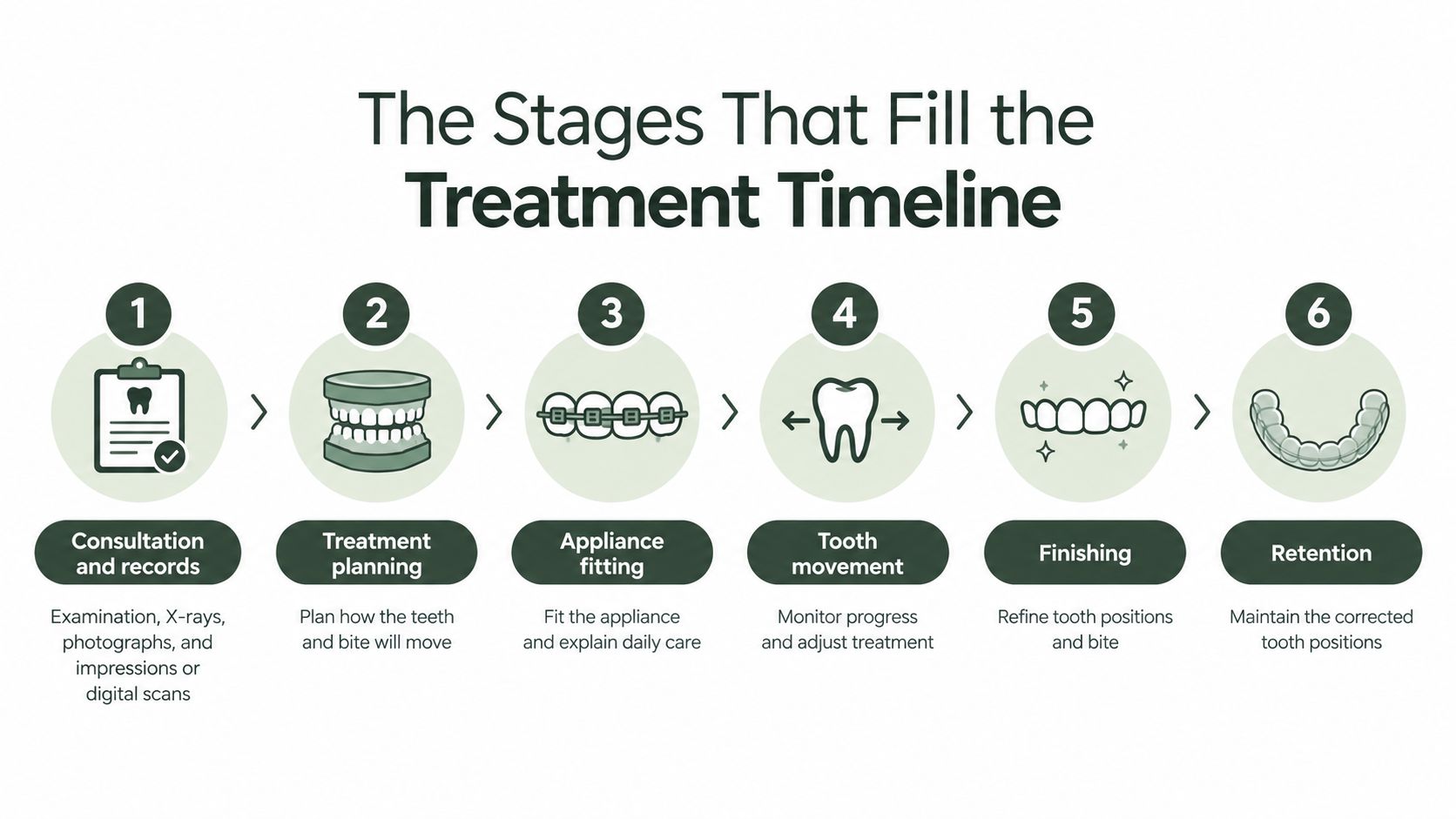
Consultation and records. The orthodontist examines your teeth and bite and may take X-rays, photographs, and impressions or digital scans. These records show what needs to move and whether your teeth, gums and supporting bone can handle the proposed treatment.
Treatment planning. Goals are set, along with the method for creating space and correcting the bite. The plan may include extractions or other ways to control tooth movement, depending on your case.
Appliance placement. Brackets are bonded to the teeth, or the first aligners are issued, and you learn how to care for them. Ask what to do if a bracket comes loose or an aligner cracks.
Active tooth movement. This is usually the longest stage. Scheduled reviews every few weeks let the orthodontist assess progress and adjust the plan.
Finishing and detailing. Once the main alignment is achieved, the orthodontist checks how the teeth meet and whether individual positions need refinement. A smile can look straight well before this stage ends, which is why "teeth look straight" and "treatment finished" are two different dates.
Removal and retention. Braces come off, the teeth are checked, and retainers are fitted to hold the new positions while surrounding tissues adapt. Many quoted timelines stop at removal and leave this phase out entirely.
Each tooth sits in bone the way a fence post sits in packed soil: pull too fast and the support around it suffers, so movement has to stay gradual and controlled. That biology, not the appliance, sets the pace. Your part is to attend reviews, keep brackets clean, and wear aligners or elastics exactly as prescribed. For what aligner wear feels like day to day, see what to expect with clear aligners.
Factors That Lengthen or Shorten Your Plan
A front smile can look tidy while the bite still needs detailing. That gap between looking straight and finishing the plan is where quoted timelines can mislead.
In one UAE study of children aged 9–12, researchers recorded crowding in 38.3%, increased overjet in 32%, crossbite in 19%, impacted teeth in 11.3%, and open bite in 9.3% (UAE research on malocclusion in children). Those figures describe that sample rather than every patient, yet they explain why two people who both “just want straighter teeth” may need very different amounts of movement.
| Factor | Effect on duration | Example |
|---|---|---|
| Severity of crowding | More space to create means more movement and sometimes extractions | A small gap versus crowding that needs space creation |
| Bite relationship | Corrections can add stages and checks after the front teeth look aligned | Overjet, crossbite, or open bite may still need settling |
| Impacted teeth | The tooth may need exposure and guided movement | A canine that has not erupted normally |
| Extractions and anchorage | Closing space while controlling unwanted movement adds steps | Creating room before retracting front teeth |
| Age and growth | Growth can help in some cases and change timing in others | Guidance during growth versus adult mechanics |
| Attendance | Missed reviews can postpone adjustments and checks | A broken bracket plus a delayed visit |
| Gum and bone health | The plan must respect safe movement limits | Gum condition is checked before planning |
| Appliance type | Mechanics and patient wear requirements differ | Ceramic breakage or inconsistent aligner wear |
As noted earlier, the Dubai fixed-braces study associated longer treatment with greater case difficulty and younger patients. The practical point is simpler: the plan length reflects everything the orthodontist still has to control, including details that are easy to miss in a mirror.
Attendance is one factor patients can influence. Keep reviews, repair issues promptly, and wear aligners or elastics exactly as prescribed; small lapses can push finishing later because each adjustment depends on the previous response. Gum and bone health set boundaries too, so the orthodontist assesses them before deciding how quickly teeth can move.
Some bite concerns involve jaw and muscle factors as well as tooth position; for background, see understanding nonsurgical bite correction. A consultation with examination and records is the reliable way to learn which of these factors apply, and whether a quoted finish means visible alignment or the full plan through retention.
What Aligner Timelines Include and Leave Out
Clear aligners carry a reputation for speed, but a quoted number may cover only the first stage of treatment rather than the finished result. A randomized trial run through the European University College in Dubai assigned 80 patients to change their aligners every seven, 10 or 14 days. The initial aligner phase averaged about five months with weekly changes and about nine months with 14-day changes. (UAE clear-aligner trial)
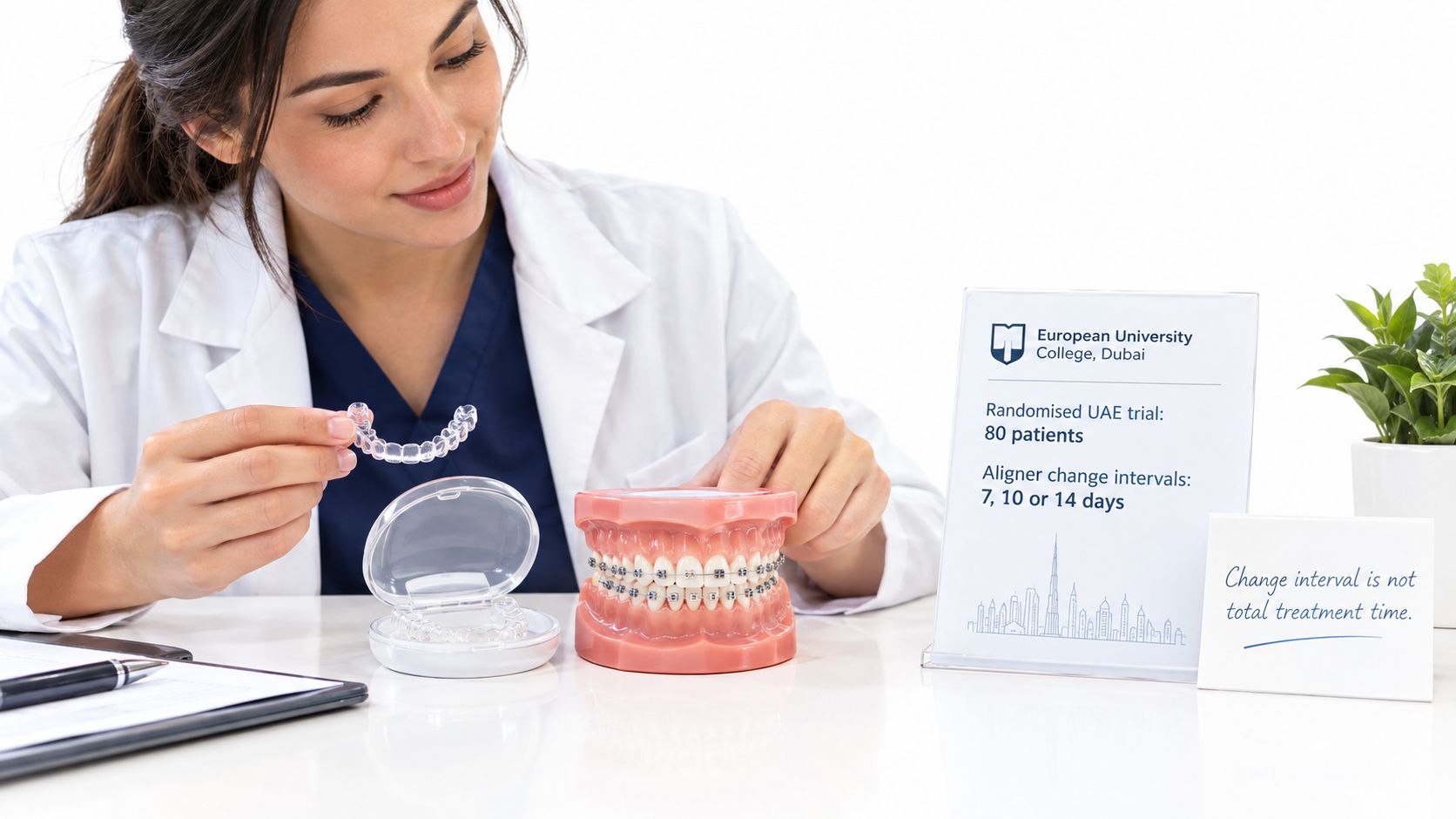
Both figures describe the initial aligner series alone. Refinements, bite finishing and retention sit outside them. A quoted aligner timeline works like a painter's estimate for a house: the walls can look done after the first coat, while prep, touch-ups and the final coat still belong to the job. As noted earlier, the Dubai fixed-braces study put average treatment near 27 months, and that figure covered the full plan, so the two numbers are not measuring the same thing.
Before comparing quotes, ask whether the estimate covers:
- Diagnosis and planning, or only the time spent wearing appliances.
- Active tooth movement, including elastics if they are prescribed.
- Refinement aligners or finishing adjustments, if they prove necessary.
- Repair visits for damaged appliances.
- Retention, the phase that follows active treatment and holds teeth in place.
A quoted aligner timeline also assumes the trays are worn exactly as directed. Shorter wear means the teeth may not track the planned sequence, and the estimate stops holding. The right appliance and schedule come from a clinical examination, not a general promise about speed.
The single most useful question to bring to a consultation is: "What does this number include?" For a closer look at how aligners guide tooth movement, read the science behind discreet aligner treatment.
The video below offers a visual introduction to how orthodontic treatment works.
Signs of Progress That Do Not Mean Finished
A smile can look noticeably straighter within the first few months, while the full plan may still have a long way to run. Visible alignment works like a freshly painted house: it can look finished while structural work continues. Front teeth often line up early under light forces, while roots, rotations, bite contacts and anchorage need more time, since movement relies on controlled changes in the surrounding ligament and bone.
Encouraging signs along the way include:
- Crowding easing where teeth overlap.
- Gaps closing or becoming smaller.
- Rotated teeth turning towards an even position.
- The bite beginning to settle.
- Adjustment soreness fading between visits.
These signs are worth raising at reviews, since they mark the visible stage rather than the finish line. The orthodontist is also checking what a mirror cannot show: root positions, whether the bite meets evenly, and whether each tooth has reached its planned place. Ceramic brackets can add time in some cases if friction limits certain mechanics or breakages interrupt progress.
Your original estimate can hide the same gap. As covered earlier, a quoted duration may count only active tooth movement and leave out refinements, finishing and retention. Teeth that look straight early on confirm the plan is working. Only the full bite and root assessment can confirm it is complete.
Contact the clinic promptly about a broken bracket, a loose wire, an aligner that no longer fits, bleeding gums, or pain beyond usual adjustment soreness. Comparing photographs from each review with the milestones in your written plan reveals changes too gradual to notice day to day.
Realistic Ways to Keep Treatment on Schedule
You can't control every part of tooth movement, but consistent care can help avoid preventable delays. These habits support the plan without guaranteeing a particular finish date.
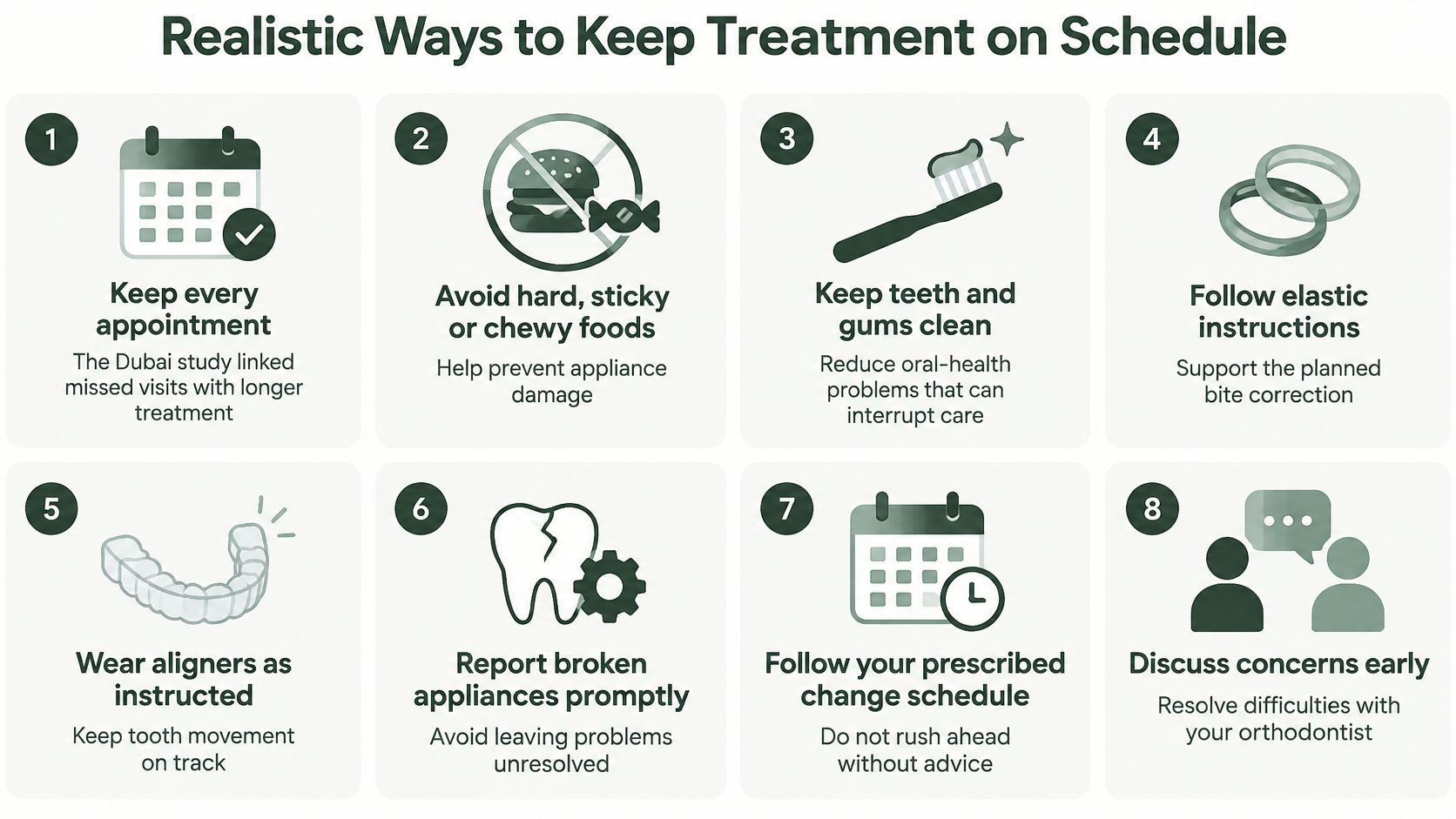
Keep every appointment. The Dubai study linked missed appointments with longer treatment. If you can't attend, contact the clinic to arrange another review rather than leaving a long gap.
Avoid hard, sticky or chewy foods. These can damage brackets or wires and may require an extra visit to repair the appliance.
Keep teeth and gums clean. Brush carefully around brackets and follow instructions for cleaning between teeth. Gum health affects how safely teeth can be moved.
Wear elastics as directed. If elastics are part of your plan, use them according to the orthodontist's instructions. Don't change how you wear them without asking.
Wear aligners as instructed. The practice's prescribed wear schedule matters. If you're struggling to wear trays consistently, tell the orthodontist instead of continuing off-schedule without saying anything.
Report breakages promptly. A broken bracket or loose wire should be raised with the clinic rather than left until the next routine visit. The team can advise whether it needs an earlier review.
Ask about early treatment when appropriate. Interceptive treatment may address a developing bite, but it doesn't always reduce the total treatment time. A specialist needs to assess the child's needs and likely next steps.
Compare plans by scope and milestones. A shorter quoted timeline may cover a narrower phase of care. Ask what the estimate includes and how progress will be reviewed.
Retainers are part of the overall plan, not an optional extra after braces. No appliance or routine guarantees a shorter schedule, and your orthodontist must decide what's realistic for your teeth and bite.
Common Questions About Braces Timelines
How long do braces take on average in Dubai?
Full fixed-braces treatment commonly runs close to two years, and a UAE clinical study of fixed-appliance patients reported an average somewhat beyond that, as noted earlier. Planning for two years or longer is sensible for a full course of care. Your own estimate still depends on examination findings and how much correction your bite needs, so treat published averages as a rough frame, not a personal forecast.
Are clear aligners always faster?
Speed depends on what the quoted timeline covers. As noted earlier, a UAE aligner trial measured only the initial phase of tray wear, not the whole plan. Refinement trays, bite correction and retention can add months that a headline figure leaves out. Teeth can also look straight well before the bite work finishes, so visible progress and a completed plan are two different milestones.
Is soreness after adjustments normal?
Mild soreness for a few days after an adjustment is common and usually eases on its own. Contact the clinic if pain is severe, lasts longer than expected, or you suspect a broken bracket or loose wire.
Can adults have orthodontic treatment?
Many adults can be assessed for braces or aligners. Suitability, appliance choice and expected duration depend on gum health, bone support and the movements required, which is why a clinical examination comes before any estimate.
Does a longer treatment mean a worse result?
A longer plan usually reflects more movement or bite correction, not a poorer outcome. Wearing retainers as directed afterwards is what keeps the corrected positions stable.
Confirm Your Timeline Before You Start
A useful estimate comes from an examination and diagnostic records, not from the appearance of your teeth or a general appliance comparison. The orthodontist needs to assess your crowding, bite, gum health and the movements required before giving a case-specific range.
Before starting, ask:
- What does the estimated active-treatment time include and exclude?
- How many adjustment visits are planned, and how often will they take place?
- What extraction, anchorage and retainer plan is proposed?
At Yoyimé Clinic, Ground Floor, Exit 1, Salah Al Din Metro Station, Deira, Dubai, an orthodontic consultation can be a chance to discuss options suited to your bite, crowding and goals. The wider Dentistry services at Yoyimé Clinic include dental care beyond orthodontics. Your final plan depends on clinical examination and the information gathered in your records, so no timeline can be promised before assessment.
If you're considering braces or clear aligners, book a consultation at Yoyimé Clinic to discuss your teeth, bite and treatment questions. The team can explain the options that may suit your needs and what a personalised timeline would include.