


5 Questions to Ask: Ceramic vs Metal Braces for UAE Patients
Most patients get equivalent results from either option, so the real decision comes down to priorities: ceramic braces cost more and carry a slightly higher breakage risk, but they’re far less visible; metal braces are tougher, cheaper, and easier to maintain. Both correct bites and straighten teeth to the same standard when an orthodontist plans the case properly. What follows covers daily care, the risks worth knowing about, and how to choose with confidence.
TL;DR:
- Ceramic brackets are more brittle and have higher breakage rates, especially on lower back teeth during early treatment stages.
- Self-ligating ceramic systems or frequent ligature changes can minimize staining issues caused by elastic ligatures.
- Metal brackets are more durable, less expensive, and better suited for patients with heavy bite forces or habits like nail-biting.
- Treatment time remains similar for both materials, with case complexity and wire sequencing playing bigger roles than bracket material.
- Cost differences favor metal braces, though ceramic options with metal-reinforced slots can provide a less visible alternative if appearance is a priority.
Table of Contents
- Ceramic vs metal braces: the key differences at a glance
- How fixed braces work and where the material actually matters
- Pros and cons of ceramic braces
- Pros and cons of metal braces
- What to expect during treatment: the daily reality
- What are the real risks: breakage, staining, and enamel damage?
- How do you actually choose between them?
- Yoyimé Clinic’s approach to choosing braces
- Book a consultation with Yoyimeclinic
- Sources
- FAQ
Ceramic vs metal braces: the key differences at a glance
The choice rarely comes down to one factor. Appearance, durability, cost, and how much fuss you want during treatment all pull in different directions, and ceramic braces versus metal braces perform differently on each.
Appearance. Ceramic brackets are tooth-coloured or translucent, so they blend into the enamel and are far less noticeable across a dinner table. Metal brackets are visible by design, though that’s not always a downside: many teenagers actively want the bold look and use coloured elastics to make a statement rather than hide one.
Durability. Metal brackets rarely chip or fracture. Ceramic brackets are more brittle by nature, and some clinical sectors report higher breakage rates, particularly on lower back teeth that take more biting force.
Staining. The ceramic material itself resists staining well. The clear elastic ligatures holding the archwire in place are the real culprit, picking up colour from curry, coffee, or red wine between changes.
Treatment time. Ceramic brackets can create more friction against the archwire than smooth stainless steel, but this rarely changes overall treatment length for most patients according to a clinical review of bracket friction. Case complexity matters far more than bracket material.
Cost. Ceramic braces typically cost more than metal, reflecting the material and the extra care needed in manufacturing and fitting.
How fixed braces work and where the material actually matters
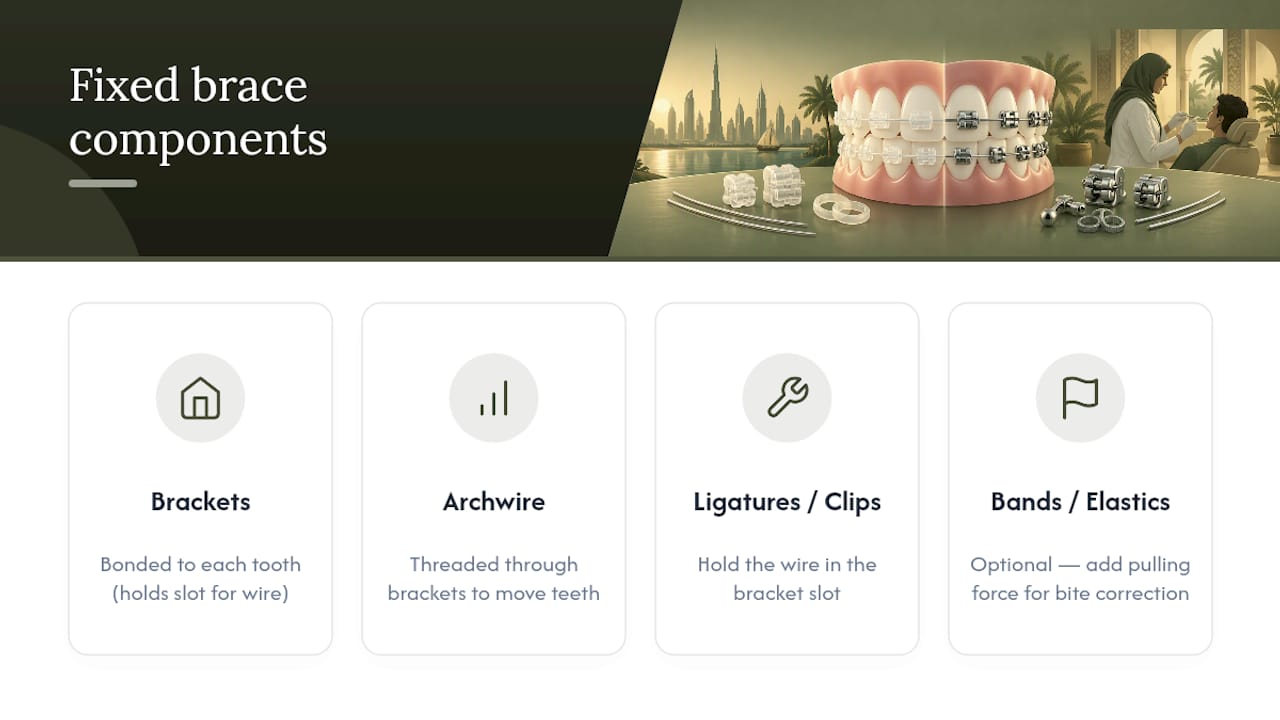
A fixed brace has four working parts: brackets bonded to each tooth, an archwire threaded through them, ligatures (or clips) holding the wire in the bracket slot, and sometimes bands or elastics adding extra pulling force for bite correction.
Bracket material affects one thing mechanically: how easily the archwire slides through the slot. Smoother metal slots generally produce less friction than ceramic ones, though many ceramic brackets now use a metal-lined slot specifically to close that gap. Slot design, not just material, drives how efficiently force transfers to the tooth.
None of this changes the destination. Clinical reviews report equivalent final alignment quality and bite correction with either material, provided the orthodontist plans the case well. The wire sequence and appointment schedule matter more than what the brackets are made of.
Pros and cons of ceramic braces
Ceramic’s main selling point is straightforward: it’s the least visible fixed option available, which is why it’s popular with adults in client-facing jobs and teenagers who’d rather nobody notice they’re wearing braces at all.
- Blends with tooth colour, especially noticeable in photos and at conversational distance
- More brittle than metal, with a higher chip or fracture risk under heavy biting force
- Clear ligatures can discolour between changes, though the bracket material itself resists staining
- Typically costs more than metal, and repairs may mean extra appointments
The American Association of Orthodontists notes that ligature staining, not the ceramic itself, causes most aesthetic complaints. Self-ligating ceramic systems or asking for ligature changes at every visit largely solves this.
Pro Tip: If you eat or drink a lot of coffee, tea, or turmeric-heavy food, ask about self-ligating ceramic brackets. They skip the elastic ligature entirely, so there’s nothing to stain between visits.
A 12-month clinical comparison found ceramic brackets failing more often in some sectors during early treatment stages, particularly on lower molars. That means more repair visits for some patients, though not a change to the eventual outcome.
Pros and cons of metal braces
Metal has been the default fixed appliance for decades, and that track record counts for something: orthodontists know exactly how it behaves under stress, and it rarely lets them down.
- Highest fracture resistance of any bracket material in most in-vitro comparisons
- Lower average cost than ceramic, with fewer repair visits over a full course of treatment
- Coloured elastics let patients personalise the look instead of hiding it
- Handles heavy occlusal forces well, useful for complex bites or patients prone to grinding
Metal is usually the better fit for anyone who plays contact sports, has a heavy bite, or has a history of breaking brackets through habits like nail-biting or chewing pens. It’s also more forgiving if compliance with dietary restrictions is patchy, since it simply tolerates more abuse.
What to expect during treatment: the daily reality
Both materials come with a similar adjustment curve, so the discomfort you feel in week one has nothing to do with whether you picked ceramic or metal.
- Days 1 to 5: Expect soreness as teeth respond to new pressure. Orthodontic wax over sharp bracket edges and standard over-the-counter analgesics manage this for most patients, and soreness typically settles within 3 to 5 days.
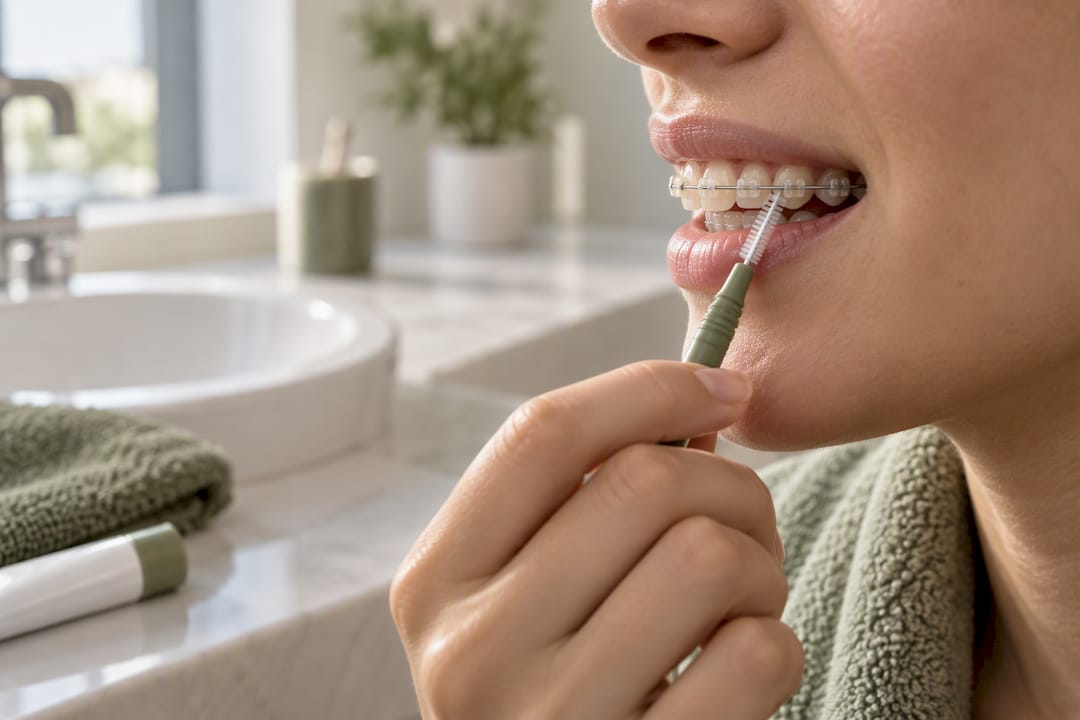
- Daily hygiene: Brush after every meal and use interdental brushes around each bracket to clear trapped food.
- Diet: Avoid hard, sticky, or chewy foods that dislodge brackets or bend wires.
- Consistency: Skipping hygiene steps or breaking diet rules is the fastest route to an unscheduled repair visit, which pushes your finish date back.
Statistic callout: Decalcification, the white-spot marks left by plaque sitting too long against enamel, is described in NHS patient guidance as the primary risk during fixed appliance treatment, ahead of anything related to bracket material.
What are the real risks: breakage, staining, and enamel damage?
Bracket failure is the risk patients ask about most, and the evidence is nuanced rather than alarming. Studies comparing failure rates found ceramic brackets breaking more often than metal in certain sectors and early treatment stages, particularly on lower back teeth handling more force. That translates into more repair appointments for some patients, not a worse final result.
White-spot lesions matter more than bracket choice. They form when plaque sits undisturbed around a bracket for too long, demineralising the enamel underneath. Interdental brushes, fluoride toothpaste, and brushing straight after meals prevent most cases, regardless of what material you’re wearing.
Debonding, removing brackets at the end of treatment, carries a small risk of enamel damage, particularly on teeth with existing crowns or veneers. Clinicians manage this with controlled removal techniques and by flagging restored teeth before treatment even starts.
How do you actually choose between them?
A useful consultation isn’t about picking a colour from a brochure. It’s about matching material to your bite, your habits, and what you’re willing to manage day to day.
Ask your orthodontist these questions directly:
- Does my bite or jaw force make one material more sensible than the other?
- What’s my realistic risk of bracket failure given my back teeth and bite pattern?
- Can I get metal-reinforced ceramic brackets as a middle ground?
- What ligature options reduce staining, and how often will they be changed?
- What’s the aftercare and hygiene plan once treatment finishes?
| Priority | Better fit |
|---|---|
| Appearance is the top concern | Ceramic, ideally with metal-reinforced slots |
| Contact sports or heavy bite | Metal |
| Budget-conscious | Metal |
| Coffee, tea, or turmeric-heavy diet | Ceramic with self-ligating brackets, or metal |
| History of breaking brackets | Metal |
— Yoyime
Yoyimé Clinic’s approach to choosing braces
Yoyimeclinic assesses each case with doctor-led consultations that weigh appearance against long-term oral health rather than defaulting to one material. Because dental and aesthetic specialties sit under one roof, your bite assessment, hygiene plan, and cosmetic goals get considered together rather than in isolation. Treatment plans and aftercare support are tailored to what actually keeps your specific case on track, not a one-size answer.
Book a consultation with Yoyimeclinic
Working out whether ceramic or metal suits your bite is easier with someone looking at your teeth directly, not a general comparison chart. Some patients prefer to get a doctor-led answer rather than guess from a table.
A consultation typically includes a full assessment of your bite and case complexity, a walkthrough of material options including metal-reinforced ceramic brackets, an estimated timeframe, a cost estimate, and a hygiene plan built around your diet and habits. Comprehensive clinics that run dental, aesthetic, and wellness services together may address related concerns, staining, gum health, or cosmetic goals beyond alignment in the same visit rather than requiring a separate referral. If you’re ready to find out which material actually fits your bite, book a consultation and get a plan built around your case rather than a generic recommendation.
This article is general information, not a substitute for advice from a qualified doctor. Consult a qualified healthcare professional about your own circumstances before acting on anything here.
Sources
- Review of bracket friction and efficiency (PMC)
- International Dental Journal (2024) — clinical study comparing bracket failure rates
- Queen Victoria Hospital NHS patient information — care with fixed appliances
FAQ
Are ceramic braces as effective as metal braces?
Yes. Clinical reviews report equivalent final alignment and bite correction with either material when treatment is well planned by an orthodontist. The difference lies in appearance, durability, and cost, not in the end result.
Do ceramic braces take longer to work than metal braces?
Ceramic brackets can create more friction against the archwire, but this rarely changes total treatment time for most patients, according to a clinical review of bracket friction. Case complexity and wire sequence matter far more than bracket material.
Do ceramic braces stain more than metal braces?
The ceramic bracket material itself resists staining well. The clear elastic ligatures holding the wire in place are what discolour between changes, which is why self-ligating ceramic systems or frequent ligature swaps reduce the problem.
Which braces break more often, ceramic or metal?
Ceramic brackets showed higher failure rates than metal in certain sectors and early treatment stages in one 12-month clinical study, particularly on lower back teeth. Metal brackets rarely chip or fracture under normal use.
How much do ceramic braces cost compared with metal?
Ceramic braces typically cost more than metal due to the material and extra fitting care involved. Yoyimeclinic doesn’t publish fixed prices for orthodontic treatment online, so the current cost estimate for your case is available directly through the clinic after an assessment.