


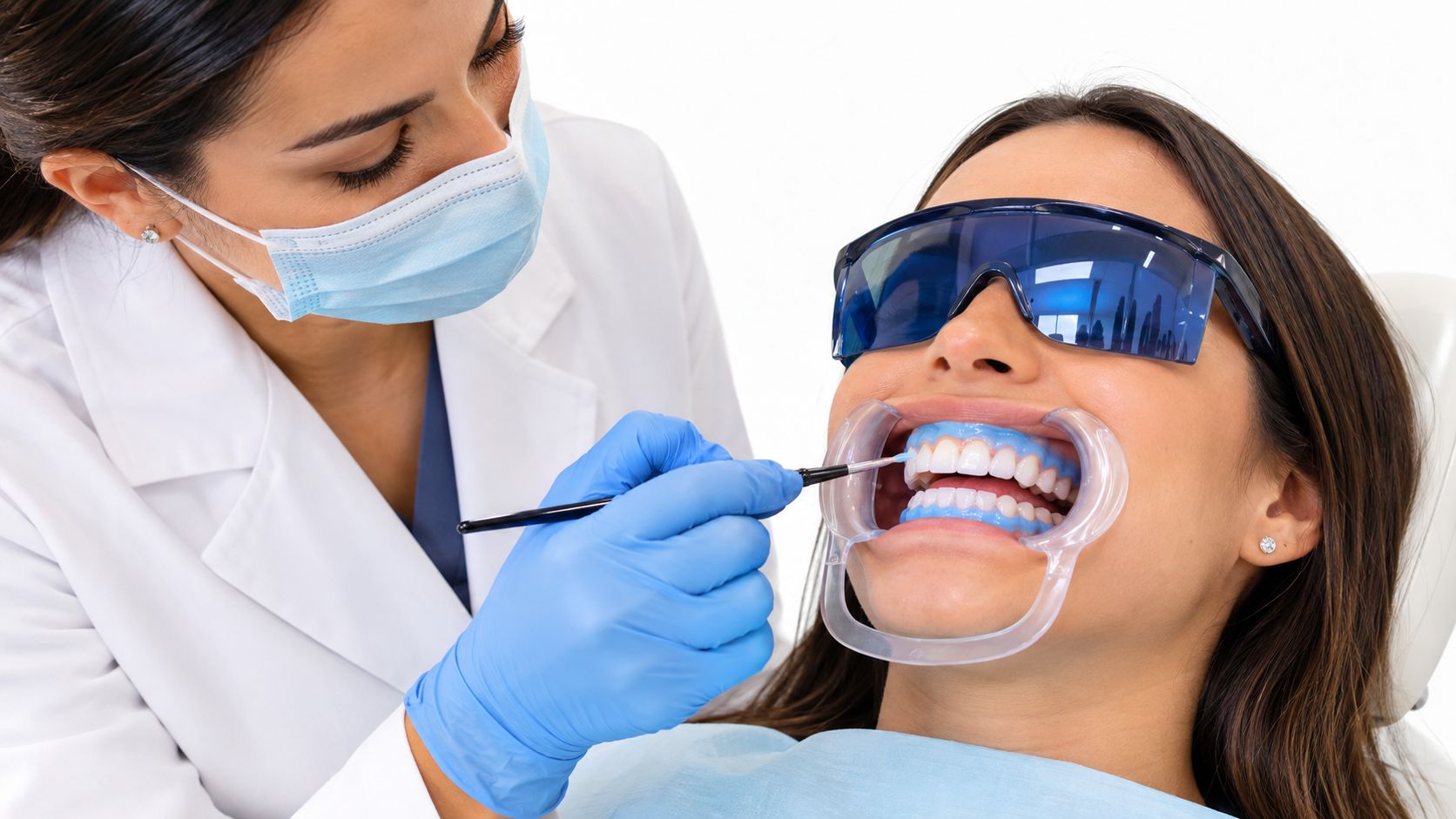
You brush twice a day, yet your teeth still look yellow under the bright lights of a Dubai meeting room or in old photographs. Coffee, tea, smoking, age and the natural colour of your teeth can all affect how your smile looks. A professional teeth whitening procedure is a dentist-supervised treatment that uses bleaching gel to lighten natural tooth structure. It isn't a cleaning, and it doesn't coat teeth with a brighter layer.
A clinic visit follows a clinical pathway: assessment, preparation, bleaching and review. The dentist first checks whether your teeth and gums are suitable, then chooses an approach and explains what whitening can realistically change. That first consultation matters because the cause of discolouration, existing dental work and your sensitivity can all affect the plan.
Table of Contents
- What a Professional Teeth Whitening Procedure Really Means
- Pre-Treatment Assessment and Why It Can Delay Whitening
- Inside the Chair What Happens Step by Step
- Results You Can Realistically Expect and How Long They Last
- Side Effects Sensitivity, Gum Irritation and When to Call the Clinic
- Choosing Wisely Why Stronger Is Not Always Better
- Is Whitening Right for You and What Comes Next in Deira
What a Professional Teeth Whitening Procedure Really Means
Whitening uses peroxide-based gel to break down some stain molecules within natural teeth. It can help with certain surface stains, such as those associated with coffee or tobacco, and some deeper discolouration. It won't change every tooth to the same shade, and it won't reliably whiten crowns, veneers or fillings.
A professional treatment differs from pharmacy strips or online kits because a dentist assesses your mouth, selects a suitable method and controls where the gel goes and how long it stays in contact with your teeth. Depending on your needs, the dentist may recommend supervised in-office bleaching or a custom take-home tray. Either way, the aim is a suitable, even result, not an artificial shade at any cost.
The four parts of a clinic visit are straightforward:
- Assessment: The dentist checks your teeth, gums, stain type, restorations and goals.
- Preparation: The team may clean the teeth and protect the gums before applying gel.
- Bleaching: The clinician applies peroxide under controlled conditions.
- Review: The dentist compares the shade, discusses sensitivity and gives aftercare advice.
Your starting tooth colour, the cause of discolouration, the condition of your enamel and your habits all influence whether whitening is suitable. If a tooth is painful or one tooth is much darker than the others, the priority may be finding the cause rather than bleaching. A consultation is the first clinical step, not an optional formality.
Pre-Treatment Assessment and Why It Can Delay Whitening
Suppose you arrive in Deira concerned about stains from coffee or shisha. Before any gel is applied, the dentist will ask what bothers you, when you first noticed the colour change and whether you've had sensitivity or previous dental treatment. Smoking is also relevant: a UAE survey of 200 Gulf Medical University students in Ajman found that 62.7% of smokers reported tooth discolouration, compared with 35.5% of nonsmokers. The study was limited to university students, so it shouldn't be read as a national estimate (the Ajman survey of tooth discolouration).
The dentist may record your starting shade with a guide, then examine your teeth for decay, cracks, worn enamel and signs of a problem inside a tooth. A gum check looks for inflammation, recession and exposed roots. The dentist also reviews crowns, veneers, fillings and bridges, because bleaching may lighten nearby natural teeth while restorations stay their existing colour.
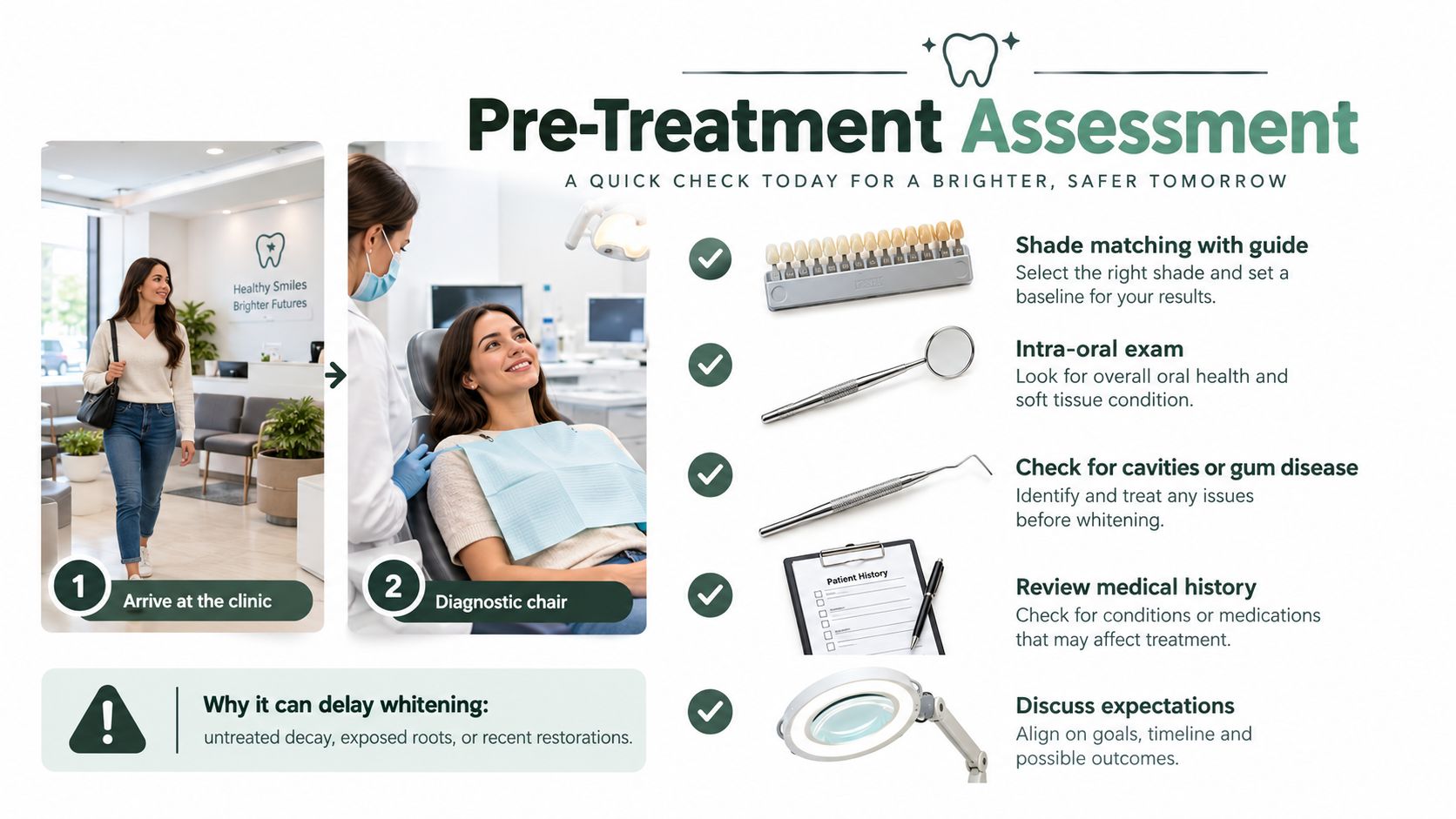
If the exam finds an untreated cavity, active gum inflammation, significant sensitivity or exposed roots, the dentist may recommend addressing that first. A scale-and-polish may also be appropriate when surface deposits or calculus are affecting the appearance. Cleaning can remove some external staining, but it isn't the same as bleaching and won't resolve every cause of darker tooth colour.
Practical rule: Whitening should follow diagnosis, not replace it. A consultation may lead to bleaching, cleaning, another treatment or a plan to wait.
For a clearer picture of the cleaning step, see this guide to professional teeth cleaning. The useful outcome of a whitening consultation is an informed decision about what will address the actual cause of the colour change.
Inside the Chair What Happens Step by Step
Once the dentist has confirmed that bleaching is appropriate, the appointment moves to preparation. You'll settle into the chair, and the clinician may place a cheek retractor to keep your lips and cheeks away from your teeth. The teeth are dried so the gel can be placed on the intended surfaces, and a protective barrier is applied along the gums to reduce soft-tissue contact.
The dentist then paints peroxide gel onto the visible natural teeth. In an in-office session, the clinician monitors the gel and checks the gums rather than leaving the application unattended. Some systems use light activation, but that doesn't make every whitening treatment the same, and the dentist will follow the protocol for the system selected.
UAE-based bleaching research used three 20-minute applications in a study on bovine tooth specimens, not human patients. That research illustrates how gel exposure can be divided into shorter applications, but it doesn't establish a universal treatment schedule. In-office appointments commonly include around 30–60 minutes of active bleaching, depending on the plan (Dubai clinical guidance on peroxide whitening).
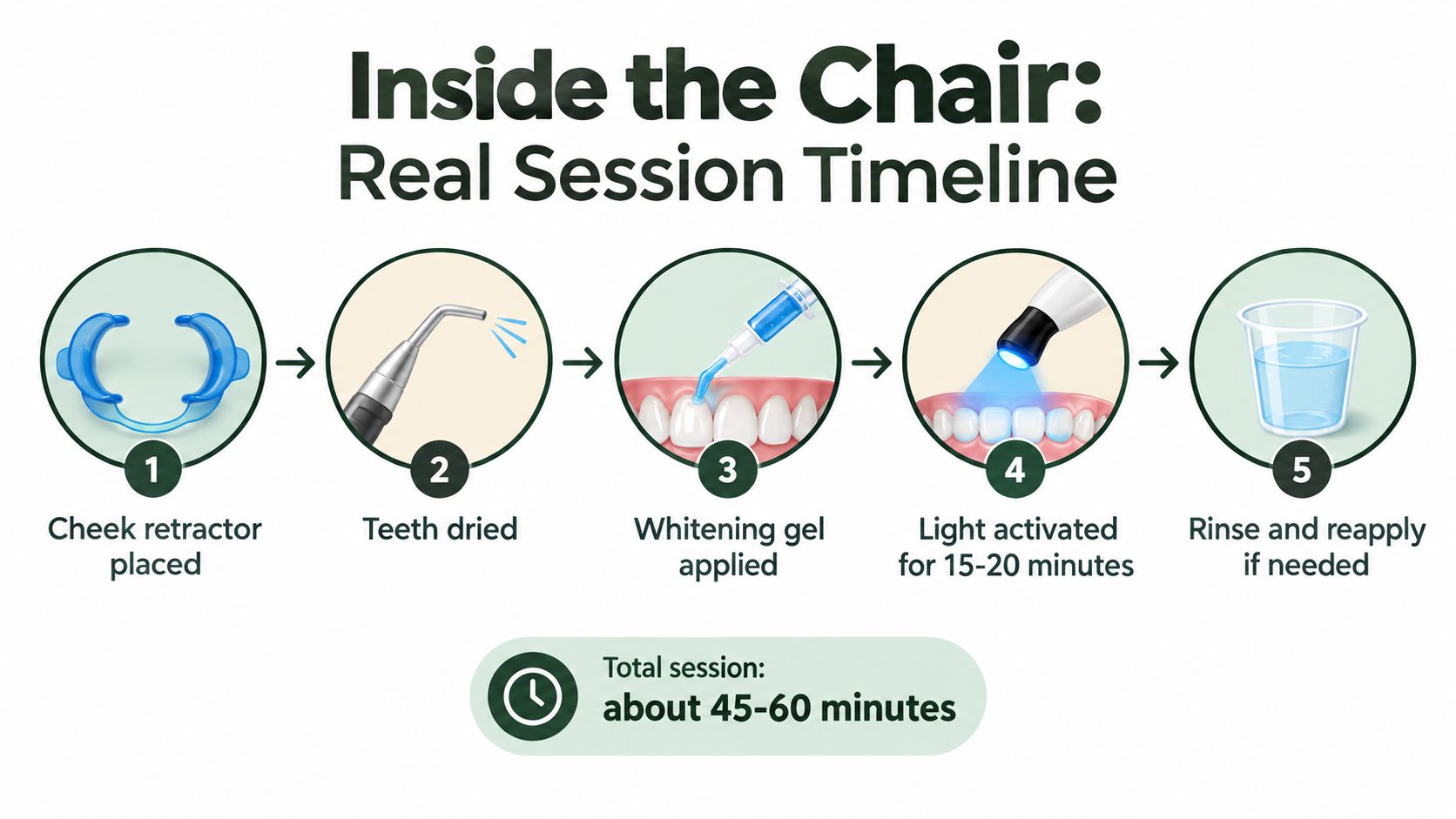
Between applications, the dentist can remove or refresh the gel when indicated, check your comfort and inspect the gums. At the end, the gel and protective materials are removed, your mouth is rinsed, and the clinician compares the result with the recorded starting shade. You may feel that your teeth are temporarily more sensitive, but you shouldn't have to ignore significant discomfort during treatment. Tell the team if you feel burning or notice gum irritation.
Here's a short overview of the kind of visit patients may expect:
Results You Can Realistically Expect and How Long They Last
Whitening can make natural teeth look lighter, but the change varies with the starting shade and the kind of discolouration. Dubai dental reporting describes approximately four to eight shades of improvement after a single professional session. Those figures come from clinic-survey or marketing-derived estimates, not a UAE-wide registry benchmark, so they shouldn't be treated as a promised outcome (Dubai reporting on whitening results and aftercare).
In-office treatment delivers the planned exposure during an appointment. Dentist-supervised take-home trays spread treatment over a longer period, and the eventual colour change can be comparable. The choice depends on your mouth, your preferences and the dentist's assessment. Neither method guarantees permanent brightness: colour can gradually change again as teeth encounter staining foods, drinks and tobacco.
| Factor | How it affects results | Practical response |
|---|---|---|
| Starting stain and tooth colour | Different causes of discolouration respond differently to bleaching. | Ask the dentist to explain what they think is causing the change. |
| Smoking, tea and coffee | Frequent exposure can contribute to renewed staining. | Reduce exposure where possible and rinse with water after drinks. |
| Oral hygiene | Plaque and surface deposits can affect how clean and bright teeth look. | Brush regularly and keep up with professional cleaning. |
| Existing restorations | Crowns, veneers and fillings don't lighten like natural teeth, so contrast may become more noticeable. | Discuss restoration shade before treatment. |
| Planned cosmetic work | New restorations need to match the intended final shade. | Consider whitening before planned veneers, bonding or crowns. |
A brighter shade is a starting point, not a permanent setting. Your habits and any visible dental work affect how the result looks over time.
If you're considering veneers or bonding, bring that up before whitening. The dentist can help coordinate the sequence so new restorations are selected to suit the natural tooth shade after bleaching.
Side Effects Sensitivity, Gum Irritation and When to Call the Clinic
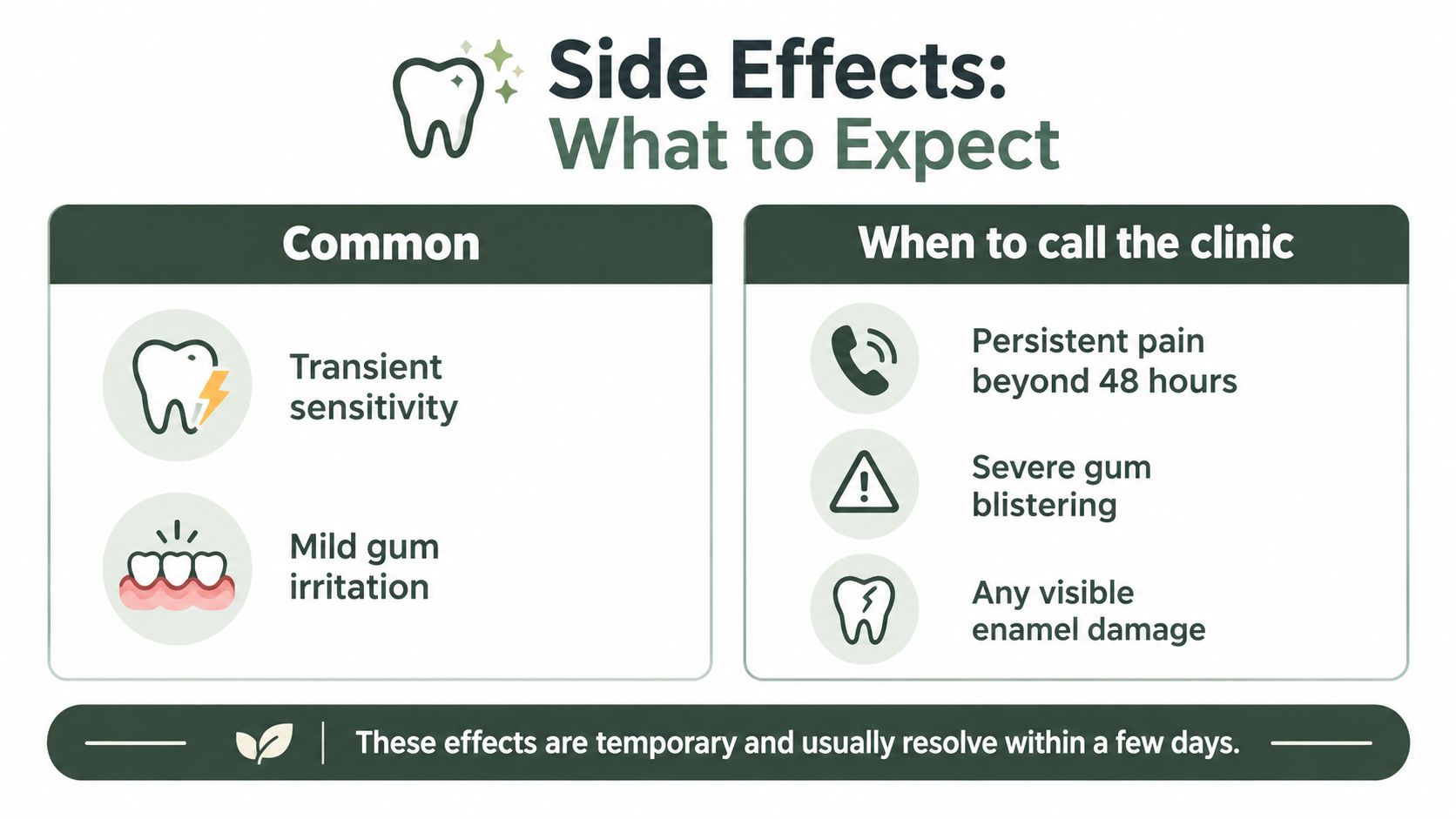
A few hours after whitening, a brief zing from a cold drink or mild gum tenderness can be unsettling. These reactions are recognised side effects and often settle within roughly 24–72 hours, though recovery varies. A review of tooth-bleaching side effects describes sensitivity and soft-tissue irritation associated with peroxide bleaching. Your dentist can help judge whether symptoms fit the expected pattern.
For the first day, avoid very hot or cold drinks if they trigger discomfort. Desensitising toothpaste before and after the appointment may help, but ask your dentist what suits your teeth. If you feel burning or see the gum tissue turn white during treatment, the clinician should stop and check the area.
How to care for your teeth afterwards
Your dentist may advise avoiding strongly pigmented foods and drinks, such as tea, coffee, red wine and dark sauces, for a short period. Coloured mouthwash and smoking can also affect the appearance of freshly whitened teeth. Follow the clinic's instructions on timing, which may include limiting these exposures for 24–48 hours.
Choose pale, lower-pigment foods temporarily, then return to your usual diet gradually. A straw may reduce contact between staining drinks and front teeth. Rinsing with water after coffee or shisha, and brushing twice daily with fluoride toothpaste, support oral hygiene, although they cannot prevent every colour change.
If you already have sensitive teeth, this guide to whitening for sensitive teeth can help you prepare questions for your dentist. Don't repeat bleaching to chase a faster or brighter result. Wait for sensitivity to settle and ask the dentist to review your teeth and shade first.
When to contact the clinic
Contact your dental clinic if you have severe pain, discomfort lasting beyond a few days, visible gum burns or peeling, or symptoms that worsen rather than settle. Burning or whitening of soft tissue during an application also means treatment should stop and the area should be assessed. If your symptoms differ from the aftercare instructions, ask the clinic for advice rather than waiting.
Choosing Wisely Why Stronger Is Not Always Better
A Dubai patient may arrive expecting the strongest gel to give the brightest result. A clinician first checks the teeth and gums, because the right choice depends on the cause of the discolouration and the condition of the mouth, not just gel strength.
In-office whitening and dentist-prescribed take-home trays use different formulations and schedules. Dubai Municipality's technical guidance for cosmetic and personal-care products states that oral whitening products containing more than 0.1% and up to 6% hydrogen peroxide are restricted to professional use. Products above 0.1% aren't allowed for people under 18. These rules help explain why an online kit or salon service should not be treated as equivalent to dental care.
The examination is a clinical decision point. The dentist looks for disease, considers whether the staining is likely to respond, and checks whether restorations are present. Fillings, crowns and veneers do not whiten like natural teeth, so bleaching can leave a mismatch. If a problem needs treatment first, whitening may be deferred.
A stronger product does not guarantee a proportionately brighter result. It may increase the chance of sensitivity, while surface deposits may call for a different approach. The dentist also controls gum protection and application time, rather than relying on concentration alone.
For a broader view of cosmetic treatment options, see this guide to aesthetic dental care. You can also explore regenerative dentistry services as a separate resource. Your dentist can explain which pathway suits your teeth and goals.
Is Whitening Right for You and What Comes Next in Deira
Whitening may suit adults with generally healthy teeth and gums, external staining and realistic expectations. It may need extra care or a different approach if you smoke heavily, have significant sensitivity or fluorosis, have several visible restorations, or are planning veneers or crowns soon. A dentist's examination is needed to confirm whether bleaching is appropriate.
Cost in Dubai depends on the plan rather than a single universal figure. Factors include the consultation, whether you choose in-office treatment or a combined plan, how many sessions are recommended, and whether cleaning or restorative work needs to come first. Ask what the estimate includes so you can understand the proposed care before deciding.
Your daily routine matters as well. If you're reviewing toothbrushes, toothpaste or other oral-care products, an oral hygiene shop from EcoQuest Purifiers is one place to browse options, but product choice can't replace an examination or professional advice.
Yoyimé Clinic is at Ground Floor, Exit 1, Salah Al Din Metro Station, Deira, Dubai. A consultation can help you understand the cause of discolouration, whether whitening should be deferred and which options fit your teeth and goals.
Yoyimé Clinic offers dentist-supervised teeth whitening following an individual clinical assessment, including discussion of in-office treatment and custom take-home trays. If you're considering whitening in Deira, visit Yoyimé Clinic to arrange a dental consultation and discuss a plan suited to your teeth.