


Milia Removal in Dubai: Safe Options and What to Expect

Milia are harmless, so removal is a choice rather than a medical necessity. Many clear on their own, but if yours are persistent or bother you, a doctor can remove them in minutes with a sterile technique, and recurrence is uncommon. The safest route is a face-to-face skin assessment first, because the small white or yellow bump you are looking at may not be milia at all. At Yoyimé Clinic in Deira, Dubai, our doctor-led consultations start with exactly that assessment.
TL;DR
- Milia are tiny, pale keratin cysts, usually under 3 mm. Sebaceous hyperplasia is different: yellowish, soft bumps with a central dimple, mostly in adults over forty.
- Doctors remove persistent milia by sterile extraction, cryotherapy, electrodesiccation, curettage or laser. Recurrence is uncommon.
- Squeezing them at home is a poor idea, particularly around the eyes. Eyelid milia call for a professional.
- In Dubai, non-surgical cosmetic procedures need a face-to-face consultation first, at a DHA-licensed facility.
- Sebaceous hyperplasia is treated differently from milia, so get the diagnosis before choosing a treatment.
Table of Contents
- What milia are, and why they appear
- Milia or sebaceous hyperplasia?
- Do milia need removing?
- How doctors remove milia
- Milia on the eyelids
- Why not squeeze them yourself?
- Treating sebaceous hyperplasia
- What happens at a milia removal appointment
- Cost of milia removal in Dubai
- Keeping milia from coming back
- Perspective
- Book an assessment at Yoyimé Clinic
- FAQ
- Sources
What milia are, and why they appear
Milia are small benign papules, under 3 mm, made of firm keratin cysts sitting just beneath the skin surface. According to UtahDERM, they occur in people of all ages and are most often found on the cheeks, eyelids and forehead. Keratin is the protein your skin and hair are made of. In a milium it gets trapped under a thin layer of skin instead of shedding away, which is why a milium has no pore opening and cannot be “popped” like a spot.
In adults, milia often show up at sites of previous skin trauma. The British Association of Dermatologists’ cryosurgery guidance describes them as 1 to 2 mm white to yellow papules, commonly on the cheeks, eyelids and trauma sites. Sunburn, a rash or a resurfacing procedure can all be the starting point.
A doctor usually diagnoses milia by looking. If there is doubt, they fluoresce bright yellow under a Wood’s lamp, a handheld ultraviolet light used in skin clinics.
Milia or sebaceous hyperplasia?
This is the question behind many searches, and the answer decides the treatment. Both are harmless, both are small, and both are often called “white bumps”. They are different things.
| Milia | Sebaceous hyperplasia | |
|---|---|---|
| What it is | Keratin trapped in a tiny cyst | Enlarged oil gland |
| Colour and feel | White to pale yellow, firm, pearl-like | Yellowish, soft, often with a small central dimple |
| Typical size | Under 3 mm | Slightly larger, single or in clusters |
| Where | Cheeks, eyelids, forehead | Central face and forehead |
| Who | Any age | Mostly adults over forty |
| Goes away by itself? | Often, in many cases | Tends to persist |
The description of sebaceous hyperplasia comes from UtahDERM: an enlargement of the sebaceous glands, usually on the central face and forehead, in adults over forty or immunocompromised people. It appears as yellowish papules with a central dell, and the tiny blood vessels run around the edge of the bump rather than across its centre. That last detail is how a doctor tells it apart from a basal cell carcinoma, a common skin cancer. This is the main reason not to self-diagnose a bump that is growing, bleeding or changing: it needs a doctor’s eyes.
Do milia need removing?
Not medically. The Primary Care Dermatology Society notes that treatment is not necessary and most milia disappear spontaneously. Many people still choose removal, and that is reasonable: milia can last months or longer in adults, they sit under makeup, and on the eyelids they are hard to ignore. Dermatology Advisor says the same: benign milia in adults favour the cheeks and eyelids, tend to be more persistent, and treatment is generally given when the patient asks for it.
So the practical question is not “must I?” but “how do I do it safely?”
How doctors remove milia
The options below come from the dermatology literature. Which one suits you depends on how many milia you have, where they are and your skin type.
Sterile extraction
The classic method. The PCDS describes breaking the surface with a sterile needle or the point of a blade, then squeezing out the contents. Done by a clinician, it takes seconds per milium. You may see a tiny pinpoint mark that settles quickly.
Cryotherapy
Liquid nitrogen freezes and destroys the cyst. For milia, a single freeze-thaw cycle of about 5 seconds is usually enough. The area can blister slightly and then heals over the following days. Dermatologists choose their freezing time with care, and it is one reason cryotherapy belongs in medical hands.
Electrodesiccation, curettage, cautery and laser
For persistent or numerous milia, UtahDERM lists topical tretinoin, scalpel or comedone extraction, electrodesiccation (a fine electric current), curettage (scooping), cauterisation and ablative laser. It also notes that recurrence is uncommon after treatment. If you have medium to deep skin tones, the choice of energy device matters for pigmentation; our guide to diode versus alexandrite lasers for Fitzpatrick III–V skin explains why a doctor chooses settings by skin type.
Topical retinoids
A prescription retinoid such as tretinoin speeds up skin turnover and can help milia surface. It works slowly and can irritate, so it is started under a doctor’s direction, not picked off a shelf.
Milia on the eyelids
Eyelid skin is the thinnest on the face, and the eyeball is millimetres away. This is the one place where a slip with a needle or a squeeze with nails can cause real harm: scarring, infection, or injury to the eye.
Eyelids are among the most common sites for milia, according to both UtahDERM and the BAD cryosurgery guidance. Because they tend to persist in adults, waiting for them to vanish can mean a long wait. If you want them gone, see a doctor who can extract them under good light and magnification, and who will first check that the bump really is a milium. If a bump on your eyelid is growing, crusting, bleeding or has lost eyelashes around it, see a doctor promptly: that is not a cosmetic question.
Why not squeeze them yourself?
A milium is a closed cyst with no opening, deeper than a spot, so pressing from outside rarely releases it. What you do release is trauma: broken skin, inflammation and sometimes a dark mark that lasts longer than the bump did. Needles or blades at home also risk infection. Steaming, scrubs and high-frequency wands do not remove an established cyst.
There is also a UAE point. Dubai Health Authority standards for non-surgical cosmetic procedures say that a face-to-face consultation and assessment is mandatory before any procedure, and that remote consultation or a home-visit assessment is not acceptable. The same document (Version 2.1, issued 18 December 2024, effective 18 February 2025) says non-surgical cosmetic services should be provided in DHA-licensed health facilities that permit dermatology or plastic surgery services. In practice: the right place for milia removal in Dubai is a licensed clinic, after an in-person look at your skin, not a mobile visit or a video call.

Treating sebaceous hyperplasia
If your bumps turn out to be sebaceous hyperplasia, milia methods will not fit. Extracting an enlarged oil gland does not make sense, and the gland tends to refill. UtahDERM lists shave removal, cryotherapy, electrodesiccation, laser and topical retinoids, and says dermoscopy (a magnified skin examination) helps confirm the diagnosis.
On laser specifically, a study in the Journal of the American Academy of Dermatology in 2000 treated 29 lesions in ten patients with a 585 nm pulsed-dye laser. Most lesions responded to a single session: 28% disappeared completely, 66% shrank in diameter and 93% flattened. It is a small, early study, so read it as an illustration of how lasers work on these glands, not as a promise of results. Your doctor will pick a technique based on the number of lesions, their location and your skin tone.

If you also want skin quality improved overall, a doctor-led plan may combine treatments over several visits. Our article on doctor-led aesthetic clinic care explains how that kind of consultation works.
What happens at a milia removal appointment
- Consultation. The doctor examines the bumps, asks how long you have had them, and confirms whether they are milia, sebaceous hyperplasia or something else.
- Cleansing. The skin is cleaned, and where needed a numbing approach is chosen for the area.
- Removal. Each milium is opened with a sterile instrument and the keratin lifted out, or treated with cold, current or laser, as the doctor decides.
- Aftercare. Expect brief redness or a tiny scab. Keep the area clean, avoid picking, wear sun protection, and follow the doctor’s advice on makeup and active skincare.
Healing is typically quick for a few lesions. Larger numbers, or energy-based methods on darker skin, call for a more careful plan, which is where a specialist’s judgement counts.
Cost of milia removal in Dubai
Prices vary by method, the number of milia and the clinic, and no checked official price list exists for this procedure. The honest answer to “how much does it cost to remove one milium?” is that a consultation fixes the figure, because the count, the location (eyelids take more care) and the technique all change it. Ask for the price once the doctor has examined your skin, and ask whether it covers the follow-up.
Keeping milia from coming back
Recurrence after removal is uncommon, but new milia can form where skin has been injured or irritated. Sensible habits help:
- Wear sunscreen daily, since sunburn is a known trigger.
- Avoid heavy, occlusive creams on the eyelid area if you are prone to bumps.
- Do not pick at healing skin.
- Keep skin turnover steady with a routine your doctor recommends, which may include a retinoid.
- Have any new or changing bump checked rather than guessed at.
Perspective
Most people who come to us about white bumps have already tried to deal with them alone. The bump is usually harmless. The first thing we want to settle is what it is, because milia and sebaceous hyperplasia are treated quite differently.
That is why we believe in one clinic, one consultation. At Yoyimé Clinic, dermatology, advanced laser treatment, aesthetic care and diagnostics sit under one roof, with doctor-led consultations that look at the whole picture of your skin rather than one bump in isolation.
We aim for refined, natural results: skin that looks like yours, only calmer and clearer. The right starting point is an in-person assessment, which is what Dubai’s standards ask for and what we think every patient deserves.
Yoyime
Book an assessment at Yoyimé Clinic
If you want your milia or other small facial bumps assessed and treated, start with a consultation at our Deira clinic. Our doctors look at your skin in person, explain what you have, and discuss the options available with you, including advanced laser treatments and facial care. Prices are not published, so the consultation is where you will get a figure for your own case.
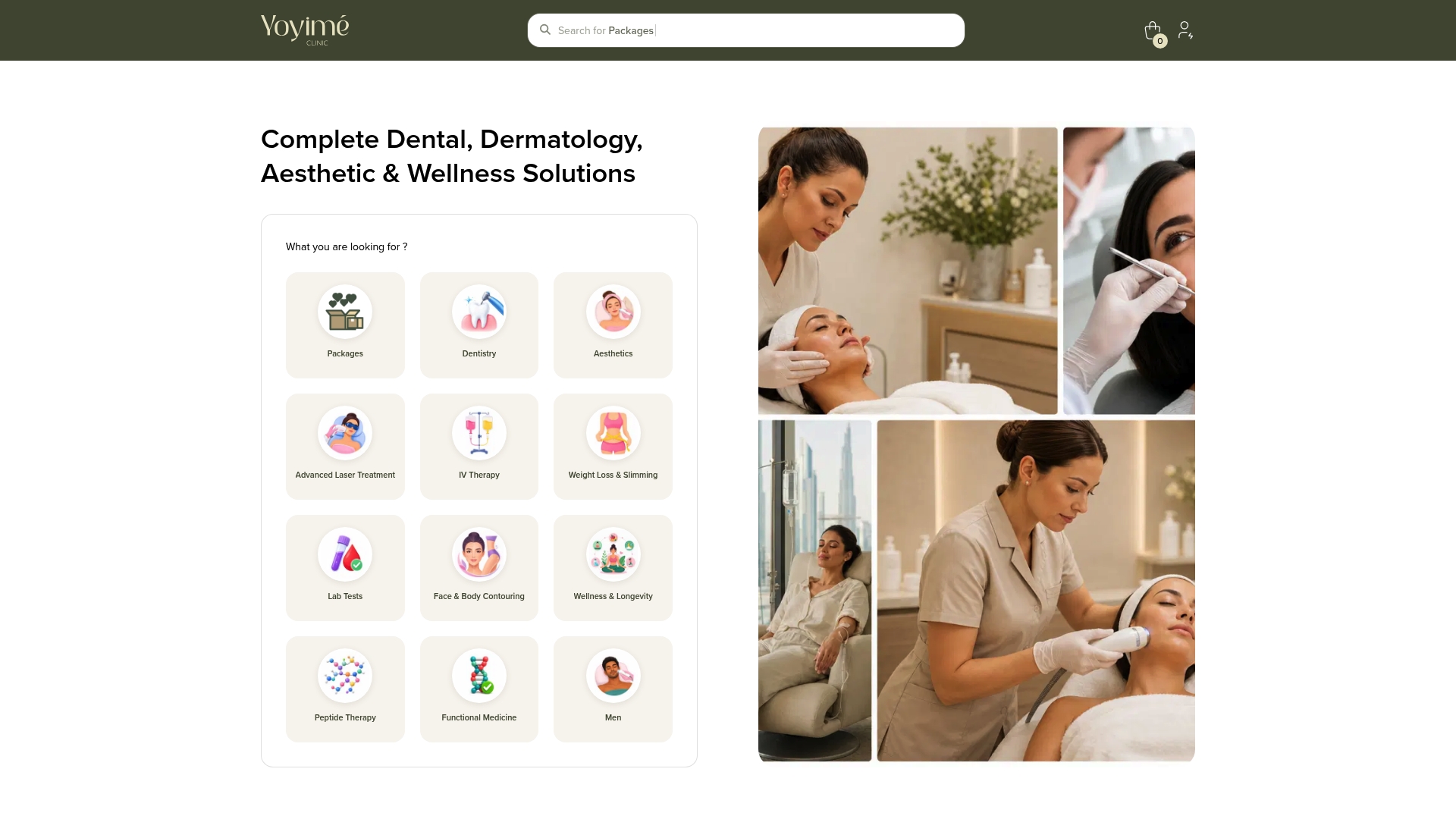
You can see the full range of dental, dermatology, laser, IV therapy and diagnostics services on our website.
FAQ
How can I remove milia bumps safely?
Have them removed by a doctor in a licensed clinic. Common methods are sterile extraction, cryotherapy, electrodesiccation or laser. Avoid squeezing or using needles at home, which can cause scarring, infection and dark marks.
How long do milia last on the eyelid?
Many milia clear by themselves, but in adults they tend to persist and can last months or longer. If they bother you, removal by a doctor is quick. Because the eyelid skin is delicate, do not attempt it yourself.
What is the difference between sebaceous hyperplasia and milia?
Milia are firm, pearl-white keratin cysts, while sebaceous hyperplasia is a soft, yellowish enlarged oil gland, often with a central dimple, mostly in adults over forty. Because treatments differ, a doctor should confirm which one you have.
Can sebaceous hyperplasia be treated with laser?
Yes. Laser is one of several options, alongside shave removal, cryotherapy, electrodesiccation and topical retinoids. A small 2000 study found most lesions responded to one pulsed-dye laser session. The right choice depends on your lesions and skin tone, so your doctor decides after assessment.
Do I need a consultation before milia removal in Dubai?
Yes. DHA standards require a face-to-face consultation and assessment before any non-surgical cosmetic procedure, and remote or home-visit assessment is not accepted. It also gives the doctor the chance to confirm the diagnosis.
Sources
- Milia, UtahDERM Diagnoses
- Sebaceous hyperplasia, UtahDERM Diagnoses
- Milia, Primary Care Dermatology Society
- Best practice in cryosurgery, British Association of Dermatologists
- Milia, Dermatology Advisor
- Pulsed-dye laser treatment of sebaceous hyperplasia, Journal of the American Academy of Dermatology, 2000
- Standards for Non-Surgical Cosmetic Procedures, Dubai Health Authority