


Imaging beats brand, HIFU vs Ultherapy: why operator skill matters

Ultherapy is a specific, branded system using micro-focused ultrasound with real-time imaging (MFU-V), while HIFU is a broad category covering many different focused-ultrasound devices with varying imaging and depth control. Because Ultherapy’s evidence and safety data are standardised through its manufacturer’s regulatory filings, it tends to be the more predictable choice, particularly near bone or nerves. Generic HIFU devices can still work well, but only when the specific machine is validated and the operator is experienced. Book a clinical consultation before choosing either.
TL;DR:
- Ultherapy’s real-time imaging confirms treatment depth and location, especially near bone and nerve areas, reducing the risk of complications.
- Generic HIFU devices vary widely in imaging, depth control, and evidence, making outcomes highly dependent on the specific machine and operator expertise.
- Most patients see gradual improvement over six to twelve months with mild, temporary side effects like redness and swelling, regardless of the device used.
- Ultherapy’s FDA-approved indications have expanded over time, targeting the brow, neck, and décolleté, with evidence supporting safety and efficacy at standard depths.
- Candidate suitability depends on mild to moderate skin laxity, with serious laxity or volume loss requiring surgical intervention for satisfactory results.
Table of Contents
- How Ultherapy (MFU-V) works and what makes it different
- Why ‘HIFU’ covers dozens of very different machines
- Key differences at a glance
- Where each treatment is used on the face and body
- What results actually look like and how long they take
- Safety, side effects and why the operator matters as much as the device
- Who should consider this treatment, and who should not
- What to ask before you book: a consultation checklist
- How an integrated, doctor-led clinic approaches ultrasound lifting
- The honest answer: imaging beats brand loyalty
- Booking a consultation at Yoyimé Clinic
- Sources
- FAQ
How Ultherapy (MFU-V) works and what makes it different
Ultherapy uses micro-focused ultrasound with visualisation, shortened to MFU-V. The device sends focused ultrasound energy to a precise depth beneath the skin, heating tissue to around 60 to 70 degrees Celsius at the focal point. That heat creates tiny thermal coagulation points, which trigger the body’s own wound-healing response and stimulate new collagen production, a process called neocollagenesis. The results build gradually as collagen remodels over the following months.
What separates Ultherapy from most other ultrasound lifting devices is DeepSEE, its real-time imaging system. Before firing any energy, the practitioner can see the tissue layers on screen, confirm that the transducer is properly coupled to the skin, and select the correct depth for that specific patient and area. This matters because it lets the clinician actively avoid bone and major nerve pathways rather than relying on estimated depth alone.
- Ultherapy’s DeepSEE imaging visualises tissue to depths of up to 8 millimetres, giving the practitioner a direct view of the treatment zone before energy is delivered.
- The system uses three standard transducer depths: 1.5 millimetres for the superficial dermis, 3 millimetres for subdermal fat, and 4.5 millimetres for the SMAS layer, the fibrous tissue that surgeons lift during a facelift.
- Each depth targets a different structural layer, so the practitioner chooses the transducer based on where laxity actually originates, not a single fixed setting for every patient.
Ultherapy’s FDA clearance documents describe imaging to depths of up to 8 millimetres and list indications including eyebrow lift, submental and neck tissue improvement, and reduction of décolleté lines. The Ulthera System 510(k) summary sets out these specifications directly, and a later filing has since broadened the approved treatment areas further.
The device’s manufacturer has continued to expand its cleared indications over time. A more recent 510(k) filing for the Ulthera System extends approval to additional body areas while reiterating the same imaging capability and standardised testing that underpins the original clearance. That regulatory trail gives Ultherapy a documented safety and performance record that is harder to find with many generic ultrasound devices.

Why ‘HIFU’ covers dozens of very different machines
HIFU stands for high-intensity focused ultrasound, and it describes a physical principle rather than one product. Dozens of manufacturers build HIFU devices, and they share the same basic idea as Ultherapy: focused sound waves heat tissue at a chosen depth to encourage collagen renewal. Beyond that shared mechanism, the similarities often stop.
Imaging is the biggest variable. Some HIFU platforms include ultrasound visualisation similar to Ultherapy’s DeepSEE; many do not, and instead rely on preset depth markings or the operator’s estimate of tissue thickness. Energy settings, probe design, cartridge shot counts and pulse patterns also differ widely between brands, which means a treatment described as “HIFU” on one machine can deliver a genuinely different experience and outcome than the same label on another.
This lack of standardisation affects the quality of evidence available for any given device. Some manufacturers have published clinical data; many have not, leaving patients to rely on marketing claims rather than independent trial results.
- Depths and regimens vary by device and study, though many published protocols use similar dermal and subdermal ranges to MFU systems.
- Pain during treatment is generally described as moderate, with sensation varying by depth, energy setting and individual pain tolerance.
- Immediate effects typically include redness and mild swelling that settle within hours to a few days, similar to what is reported after MFU-V treatment.
Choosing a HIFU device, then, means choosing a specific product with its own evidence base rather than trusting the category label alone.
Key differences at a glance
The clearest way to compare these options is dimension by dimension, since “better” depends on what matters most for your face and your risk tolerance.
- Visualisation: Ultherapy’s built-in DeepSEE imaging lets the practitioner confirm depth and coupling before treating; most generic HIFU devices lack this feature entirely.
- Regulatory evidence: Ultherapy carries standardised FDA 510(k) documentation covering its imaging, depths and indications, while HIFU devices as a category range from well-documented to largely unstudied.
- Depth control: Ultherapy offers three fixed, validated depths mapped to specific tissue layers; HIFU devices vary in how precisely depth is set and confirmed.
- Areas where this matters most: treatments near the jawline, temples, or close to bone and the mandibular nerve benefit most from imaging, since misjudged depth in these zones carries higher risk.
- Comfort and recovery: both approaches typically cause temporary redness, swelling and tenderness that resolve within days, with no significant downtime for either.
- Cost and availability: Ultherapy sessions often carry a higher price reflecting the branded device and its clinical backing, while non-imaging HIFU treatments are frequently cheaper and more widely available, which can tempt patients toward the lower-cost option without checking the specific machine’s evidence.
None of these dimensions makes one category universally superior. They simply tell you what to check before booking, and imaging plus documented evidence should weigh more heavily than price alone.
Where each treatment is used on the face and body

Ultherapy’s cleared indications, set out in its regulatory filings, include lifting the eyebrow, tightening submental and neck tissue, and smoothing décolleté lines, with additional body areas added in more recent clearances. These areas were chosen because they respond well to the specific depths the device delivers, and because the anatomy in each zone can be mapped clearly on DeepSEE imaging before treatment begins.
The three standard depths correspond to distinct tissue layers. The 1.5 millimetre depth treats the superficial dermis, useful for fine texture and early laxity. The 3 millimetre depth reaches subdermal fat, where more general firmness is addressed. The 4.5 millimetre depth targets the SMAS, the same structural layer surgeons manipulate during a facelift, which is why Ultherapy is often described as reaching “facelift depth” without cutting the skin.
- Imaging becomes particularly valuable around the jawline and temples, where bone sits close to the skin surface and misjudged depth risks periosteal irritation.
- The peri-orbital area, close to the eye socket, requires precise depth confirmation to avoid affecting nearby structures.
- Areas near the mandibular nerve, along the lower jaw, are treated more safely when the practitioner can visualise tissue layers rather than estimate them.
Generic HIFU devices are marketed for similar zones, but without imaging, the practitioner is working from experience and preset markings rather than a live view of the anatomy underneath.
What results actually look like and how long they take
Neither Ultherapy nor generic HIFU produces surgical-level tightening, and expecting a facelift result from either will lead to disappointment. What the evidence shows is more modest and gradual.
A systematic review of microfocused ultrasound for facial skin tightening found investigator-reported improvement in around 92% of patients at 90 days, with patient-reported satisfaction rising from 42% at 90 days to 53% at 360 days. That gap between investigator and patient assessments is worth noting: clinicians often see visible tightening earlier and more consistently than patients feel it themselves, and the improvement continues to build as collagen remodels over the following year.
Most patients notice initial changes within one to three months as early collagen remodelling begins, with fuller results developing between six and twelve months. This gradual timeline is a direct consequence of the mechanism: heat triggers a healing response, and healing takes time. Maintenance sessions, typically spaced a year or more apart, help sustain results as natural ageing continues.
The same review noted that outcomes are strongest in patients with mild to moderate laxity. Heavier laxity or a higher body mass index tends to reduce how much lift either technology can achieve, since there is more tissue for the energy to affect and less structural support for it to work against. For those patients, ultrasound lifting alone is unlikely to meet expectations regardless of which device is used.
Safety, side effects and why the operator matters as much as the device
Both Ultherapy and generic HIFU cause a predictable set of temporary effects: redness, swelling and occasional transient numbness or tingling in the treated area, usually resolving within days.
- Common, expected effects include erythema, mild oedema and short-lived dysesthesia that typically clear within a week.
- Rare but serious events reported in the literature include nerve injury, skin burns, subcutaneous tissue atrophy, blistering and, in isolated cases, ulceration.
- Case reports on serious adverse events following microfocused ultrasound treatments describe these outcomes as uncommon but real, underscoring that early recognition and management matter when they occur.
- Research on complications linked to high-intensity focused ultrasound devices ties many of these serious events to poor operator technique and the absence of real-time visualisation during treatment.
That last point is the crux of the safety argument. Imaging does not eliminate risk, but it gives the practitioner a way to confirm depth and coupling before delivering energy, which meaningfully reduces the chance of treating the wrong tissue layer. An experienced clinician using a well-maintained, imaging-equipped device is a fundamentally different risk profile from an inexperienced operator using an unverified machine on preset depths.
Pro Tip: Ask your practitioner directly which layer they are targeting and how they are confirming it, not just what the treatment is called.
Before any session, patients should expect informed consent that names the specific risks, a clear follow-up plan, and an explained process for managing complications if they arise.
Who should consider this treatment, and who should not
The best candidates for either Ultherapy or a validated HIFU device have mild to moderate skin laxity, realistic expectations about gradual improvement, and a body mass index within a moderate range. Younger patients in the early stages of laxity, or those seeking a subtle refresh rather than dramatic change, tend to be happiest with the outcome.
Certain factors should prompt caution or a different approach entirely:
- Severe skin laxity or significant volume loss responds poorly to ultrasound lifting alone and may be better served by surgical options.
- Implantable devices such as pacemakers near the treatment zone, active skin infections and pregnancy are commonly cited contraindications.
- Patients seeking dramatic, immediate change are better candidates for a surgical facelift or a combination approach involving fillers or resurfacing.
Practitioner guidance on candidacy for non-surgical skin tightening reinforces that these treatments are not a substitute for a facelift when there is substantial tissue volume loss, and that setting expectations correctly at the outset avoids disappointment later.
What to ask before you book: a consultation checklist
A short, ordered set of questions during your consultation will tell you more than any brand name will.
- Ask exactly which device will be used, including its model name, and whether it includes real-time imaging.
- Ask to see the machine itself or a photo of it, rather than accepting a verbal description alone.
- Request the practitioner’s relevant training, sample before-and-after photos, and an approximate number of procedures they have performed.
- Confirm the specific treatment plan: which depths will be used, how many lines or passes, the energy settings, and the comfort or anaesthesia approach.
- Ask what aftercare looks like and what happens if you experience an unexpected reaction.
Pro Tip: Walk away from any clinic that quotes a price before assessing your skin in person, or that will not name the device they plan to use.
Refusal to answer these questions plainly, missing written consent, or no follow-up plan are all reasons to seek treatment elsewhere.
How an integrated, doctor-led clinic approaches ultrasound lifting
Yoyimé Clinic brings dental, dermatological, aesthetic and wellness care together under one roof, with personalised consultations led by specialists rather than a single standardised protocol. That structure matters for ultrasound skin tightening specifically, because assessing laxity properly often benefits from a broader clinical view of a patient’s skin, health history and goals rather than a narrow, single-treatment lens.
When assessing a patient for ultrasound lifting, the priority is matching depth and treatment sequence to what that individual’s skin actually needs, rather than applying one setting to everyone who walks through the door. That means examining laxity patterns area by area and adjusting the plan accordingly, with natural, proportionate results as the goal rather than the most dramatic change possible in a single session.
The honest answer: imaging beats brand loyalty
The real decision here is not “Ultherapy or HIFU” so much as “imaging or no imaging, and who is holding the device.” Ultherapy earns its reputation because its regulatory filings and real-time visualisation give it a documented, repeatable safety margin, not because the word itself is magic. A well-studied HIFU device in the hands of an experienced operator can deliver comparable results.
What readers consistently underestimate is how much outcome variation sits with the practitioner rather than the machine. Ask about the device, ask about the operator’s experience, and treat both answers as equally important. Then book a proper consultation to get an exam and a depth-specific plan for your face.
— Yoyime
Booking a consultation at Yoyimé Clinic
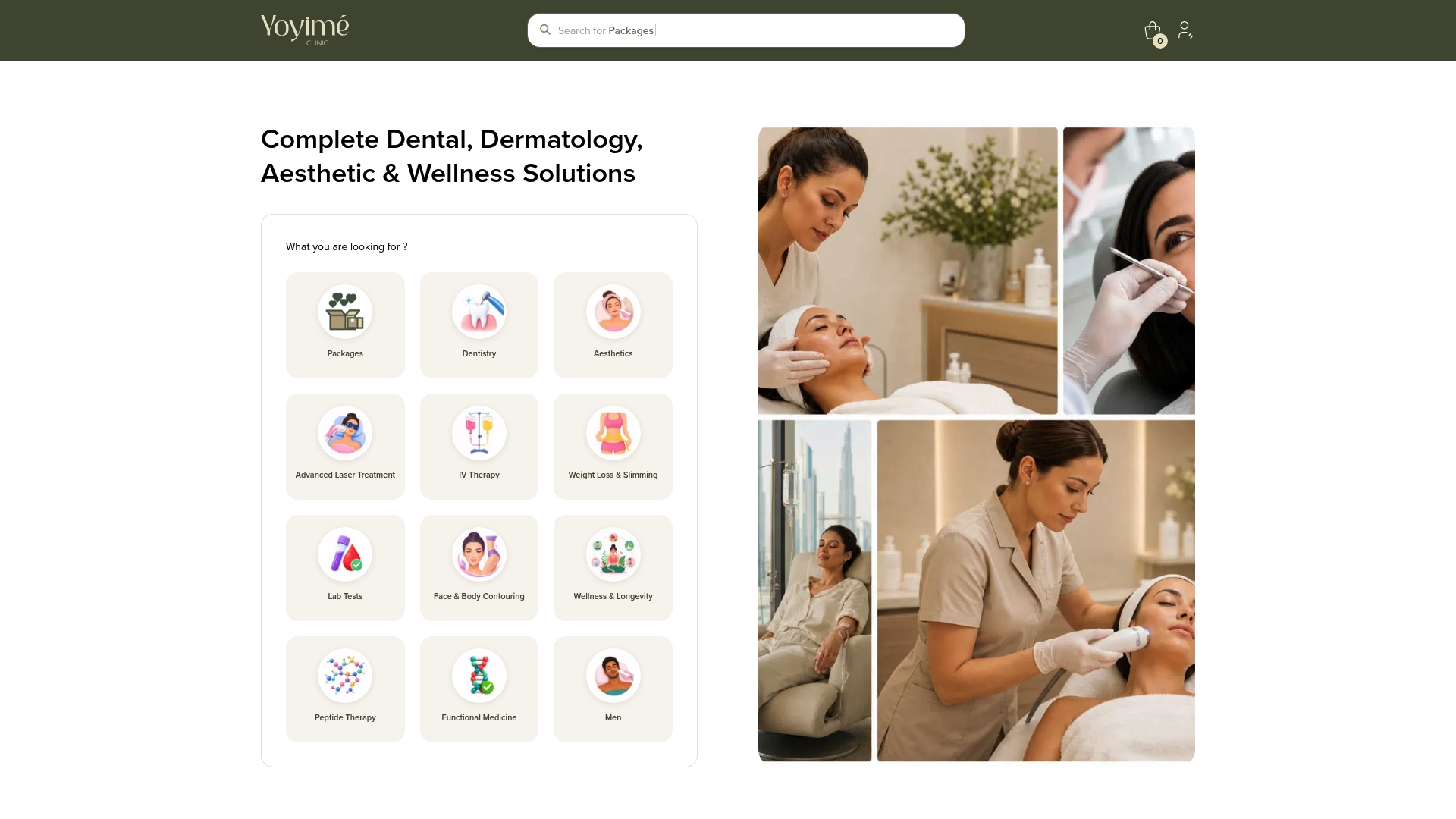
Choosing between imaging-equipped and generic ultrasound devices starts with a proper skin assessment, and that is exactly what a doctor-led consultation at an integrated clinic provides. Rather than a one-size-fits-all session, the clinic’s specialists review your laxity pattern, skin history and goals before recommending a depth and treatment sequence suited to your face.
- Consultations cover a full skin assessment before any treatment plan is proposed.
- An integrated clinic model means aesthetic, dermatological and wellness specialists can coordinate care under one roof.
- You can review the clinic’s full range of treatments and book an appointment directly online.
If you are weighing Ultherapy against a HIFU alternative, start with an in-person assessment rather than a price comparison.
Sources
- Complications linked to high‑intensity focused ultrasound devices — PubMed
- A systematic review of the efficacy of microfocused ultrasound for facial skin tightening — PubMed
- K233996: Ulthera System (Ulthera®) 510(k) summary — FDA
FAQ
What are the disadvantages of HIFU?
Generic HIFU devices vary widely in imaging, depth control and published evidence, so outcomes and safety depend heavily on the specific machine and operator. Rare but serious effects, including nerve injury and burns, have been linked to devices without real-time visualisation or poor technique. Some patients also find results modest compared with their expectations, since HIFU does not replace a surgical facelift.
Is there anything better than HIFU?
Ultherapy, a specific MFU-V system with real-time imaging, offers more standardised evidence and depth confirmation than most generic HIFU devices. Surgical facelifts remain the option for significant laxity or volume loss that ultrasound treatments cannot address. The right choice depends on your laxity severity and goals, which a clinical assessment can clarify.
Can HIFU lift sagging face?
HIFU and MFU-V devices can produce measurable tightening in patients with mild to moderate laxity, with investigator-reported improvement in around 92% of cases at 90 days for MFU specifically. Results build gradually over months as collagen remodels, and they are less reliable for heavier sagging or significant volume loss.
What is the downside of Ultherapy?
Ultherapy produces gradual results rather than an immediate lift, with full improvement typically developing over six to twelve months. It also tends to cost more than many non-imaging HIFU alternatives, and while rare serious events have been reported with microfocused ultrasound generally, its imaging system is designed specifically to reduce that risk.