


Choosing the right dental treatment starts with a different question: is the problem prevention, damaged tooth structure, infection, gum disease, tooth loss or alignment? A filling won't solve an infected tooth, and whitening won't restore a cracked one. For Dubai residents, the safest route is a clinical examination followed by a treatment plan based on the condition of the teeth, gums and supporting bone.
This guide compares seven dental care options by the problem they address. It covers examinations and prevention, fillings, root canal treatment, crowns and bridges, extractions, orthodontics and periodontal care. The most suitable option depends on individual findings, medical history, symptoms and oral-health goals. All content remains in DRAFT for Yoyimé Clinic's clinical review, and patients should seek professional dental guidance before booking treatment.
Table of Contents
- 1. Morpheus8 for acne-scar texture and treatment planning
- 2. Dental fillings for decay and minor damage
- 3. Root canal treatment for an infected tooth
- 4. Crowns and bridges for weakened or missing teeth
- 5. Tooth extraction when a tooth can't be saved
- 6. Orthodontic treatment for alignment and bite concerns
- 7. Periodontal care for gum disease and maintenance
- 7-Clinic Comparison: Acne Scar & Dark Spot Treatments
- Turn a shortlist into a safe treatment plan
1. Morpheus8 for acne-scar texture and treatment planning
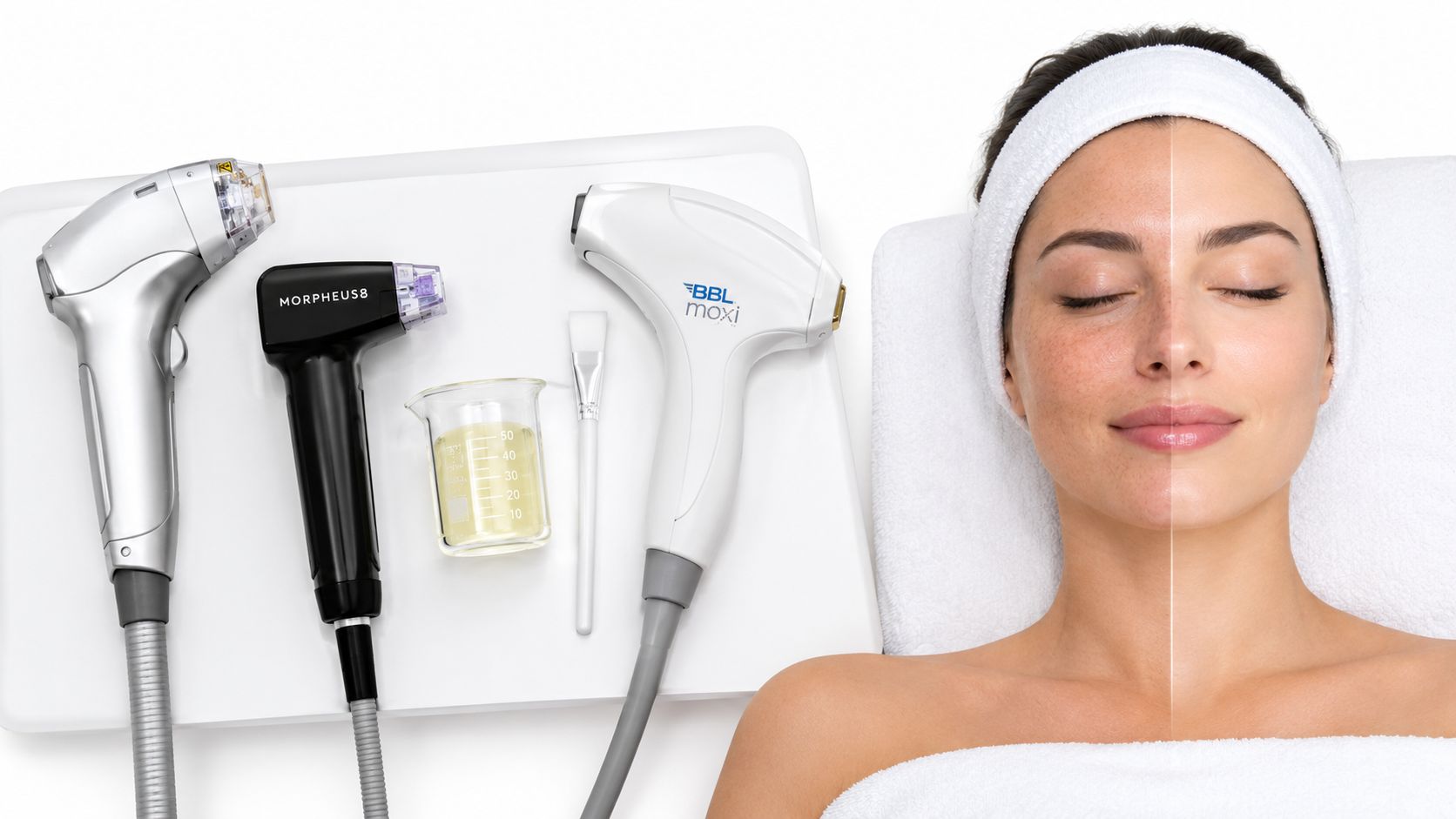
Could Morpheus8 be the right starting point when acne scars are indented or uneven rather than mainly dark? The treatment combines microneedling with radiofrequency energy. Fine needles create controlled channels, while heat delivered at selected depths encourages collagen remodeling. This makes it more relevant to rolling scars, enlarged pores and uneven texture than to flat brown marks.
A consultation should first separate texture from pigmentation. Morpheus8 may improve surface irregularity, but it does not directly remove every post-acne dark spot. A clinician may therefore consider a staged plan involving a pigment-focused peel or laser, provided the skin is stable and the risks are acceptable. Active acne, recent tanning, medication history, a tendency toward raised scars and the patient's skin tone all affect suitability.
Recovery is usually part of the decision. Temporary redness, swelling, sensitivity or pinpoint marks can affect work and social plans in Dubai, particularly when heat and sun exposure make diligent aftercare harder. Darker skin tones may face a greater risk of post-inflammatory hyperpigmentation after inflammation or energy-based treatment, so conservative settings and qualified clinical assessment matter.
Results develop gradually as collagen changes, rather than appearing immediately. The number and spacing of sessions depend on scar depth, treatment settings and healing response. Consistent sunscreen use and control of new breakouts support continuity of care.
The UAE national oral-health survey concerns dental caries, not acne scars, so it offers no basis for choosing a facial procedure. A skin assessment should guide that choice instead.
2. Dental fillings for decay and minor damage
Chemical peels can target post-acne dark spots by applying a controlled solution that loosens pigmented surface cells and encourages more even shedding. The choice of acid, strength and contact time depends on the type of pigmentation, current acne activity, skin sensitivity and previous treatments. Yoyimé Clinic lists facial treatments among its services, but suitability still requires an individual skin assessment.
Peels address pigmentation more directly than procedures designed mainly for depressed scars. They are therefore more relevant when brown marks are the primary concern, while uneven texture may require a different procedure or a staged combination plan. A peel will not correct every scar or remove the cause of recurring breakouts.
Benefits and limitations
Downtime varies with peel depth. A superficial peel may cause temporary redness, tightness or light flaking, while a stronger treatment can produce more visible peeling and require longer social recovery. In Dubai, heat, sunlight and outdoor exposure can complicate aftercare, so treatment timing and strict broad-spectrum sunscreen use should form part of the plan.
Darker skin tones can be more vulnerable to post-inflammatory hyperpigmentation after irritation. Conservative settings, careful product selection and assessment by a qualified clinician can reduce avoidable risk, but no peel is risk-free. Active inflammation, recent tanning, medication history and a tendency toward abnormal scarring may change the recommendation.
Patients should ask:
- Which pigment is being treated? Melasma, post-inflammatory marks and other causes may respond differently.
- How much downtime is expected? This affects work, social plans and sun exposure.
- Is the peel appropriate for this skin tone? The clinician should explain irritation and pigmentation risks.
- What home-care changes are needed? Sunscreen and acne control support continuity and help limit new marks.
Pigmentation often fades gradually rather than immediately. The number and spacing of sessions depend on the peel selected, the skin's healing response and whether treatment is combined with another modality. Final suitability requires an examination.
3. Root canal treatment for an infected tooth
Root canal treatment addresses infection or severe inflammation inside a tooth. The dentist removes the affected pulp, cleans and shapes the internal canals, then seals the space. The aim is to remove infection and retain the natural tooth when it remains restorable.
Symptoms can include persistent toothache, sensitivity to hot or cold, pain when biting, swelling or a gum abscess. However, symptoms vary, and a tooth may require assessment even when discomfort is limited. A clinical examination and appropriate imaging help the dentist determine whether root canal treatment is indicated.
What the process involves
The dentist first evaluates the tooth and discusses the findings. During treatment, the tooth is isolated, the infected tissue is removed and the canals are disinfected and sealed. The tooth may then need a permanent restoration to protect it from further damage.
Root canal treatment doesn't make every tooth restorable. A tooth with extensive fracture, insufficient remaining structure or advanced supporting-tissue problems may require another option. The clinician should explain the alternatives, which can include extraction followed by discussion of tooth replacement.
Patients often worry about discomfort. The experience varies according to the condition of the tooth, the presence of infection and individual sensitivity. No dental procedure should be described as completely painless, but the dentist can discuss anaesthesia, appointment stages and ways to manage discomfort.
Root canal treatment is not a cosmetic procedure. It addresses disease inside the tooth and should be planned around the tooth's long-term function and restorability.
After treatment, patients should follow the dentist's instructions for eating, oral hygiene and any temporary restoration. A final crown or other restoration may be considered when the tooth needs additional protection.
4. Crowns and bridges for weakened or missing teeth
Crowns cover and protect a damaged tooth. Bridges replace a missing tooth by using adjacent teeth or other supporting structures, depending on the design and clinical plan. Yoyimé Clinic provides restorative dentistry that includes crowns and bridges.
A crown may be considered when a tooth has lost substantial structure through decay, fracture, wear or previous treatment. It can help restore shape and function when a filling would not provide adequate protection. The dentist must assess the tooth's remaining structure, gum health, bite and ability to support the restoration.
A bridge may be considered when a patient has a missing tooth and the neighbouring teeth or supporting tissues are suitable. It isn't automatically the best option for every missing tooth. Alternatives may include a removable appliance or an implant-based plan, subject to clinical assessment and confirmation of available services.
Questions to discuss before treatment
- Can the tooth be restored predictably? A crown can't compensate for a tooth that lacks adequate support.
- Are the gums healthy enough? Inflammation can affect comfort, cleaning and long-term stability.
- How will the restoration affect the bite? The dentist must check how the teeth meet during chewing.
- How will the area be cleaned afterward? Patients need practical instructions for brushing and cleaning under or around a bridge.
The process may involve preparation, an impression or digital scan, a temporary restoration and a later fitting appointment. The number of visits depends on the tooth, the restoration and the clinic's workflow. Patients should request an explanation of the proposed material, stages, maintenance and pricing factors before proceeding.
5. Tooth extraction when a tooth can't be saved
Extraction removes a tooth that can't be restored safely or predictably. Common reasons may include extensive decay, severe fracture, advanced periodontal damage or an impacted wisdom tooth. Yoyimé Clinic lists tooth extraction and wisdom tooth extraction within its oral-surgery services.
Extraction is not always the first choice. If a tooth can be treated and maintained, preserving it may be discussed. If the tooth is unsuitable for restoration, however, delaying treatment may allow pain, infection or damage to surrounding tissues to continue.
Before and after an extraction
The clinician should review the tooth, take relevant imaging when needed and explain the procedure. Medical history, medications, allergies and previous reactions to dental treatment can affect planning. Patients should provide complete information before the appointment.
After extraction, the dentist gives instructions designed to support healing. These may cover pressure on the treatment area, eating, oral hygiene, smoking, strenuous activity and warning signs that need review. The recovery experience varies according to the tooth, the complexity of the procedure and the patient's health.
An extraction also raises a longer-term question: does the space need replacement? A missing tooth can affect chewing, neighbouring-tooth movement and appearance, although the appropriate next step depends on the location and the patient's needs. Replacement options should be discussed only after the dentist has assessed healing, bone, gum health and overall suitability.
6. Orthodontic treatment for alignment and bite concerns
A patient with crowded teeth, an uneven bite or spacing needs more than a cosmetic preference. The orthodontist first assesses tooth position, jaw relationship, roots, gums, decay and oral hygiene before recommending an appliance. Yoyimé Clinic lists ceramic braces, clear aligners and interceptive orthodontics among its orthodontic services.
| Option | Often considered when | Main trade-off |
|---|---|---|
| Ceramic braces | Teeth need controlled movement, including cases where fixed appliances may offer greater predictability | They remain attached, require careful cleaning and can affect appearance |
| Clear aligners | The planned movements suit removable trays and the patient can follow wearing instructions consistently | Progress depends on patient participation, and some movements may be less predictable |
| Interceptive orthodontics | Growth and dental development indicate that an earlier assessment may change planning | The approach differs for younger patients and may involve later monitoring |
The choice is therefore clinical, not merely cosmetic. Active decay or gum disease may need treatment before tooth movement begins. The complexity of the movement, the patient's age and growth, and the condition of supporting tissues all affect suitability.
Orthodontic care also includes continuity after active treatment. Teeth may shift, so retainers and follow-up reviews form part of the plan. Appointments are used to monitor movement, appliance fit, hygiene and any required adjustments. The clinician should explain likely stages, appointment patterns, retention, cleaning requirements and cost factors, without promising a fixed timeline before examination.
7. Periodontal care for gum disease and maintenance
Could a treatment plan improve acne scarring yet create new pigmentation if maintenance is overlooked? Continuity of care helps control that risk, especially in Dubai, where strong sun exposure can darken post-inflammatory marks after procedures.
Maintenance depends on the problem treated. Light chemical peels may be scheduled at clinical intervals for superficial discoloration, while microneedling targets uneven texture through controlled skin injury and usually requires recovery before reassessment. Laser procedures can address mixed scarring and pigmentation, but their intensity, downtime and pigment risk require careful selection. Darker skin tones may need conservative settings, test areas or non-device options because inflammation can trigger further hyperpigmentation.
Combination planning should follow sequence rather than stack every treatment together. A clinician may first control active acne, then address pigmentation, texture or both, allowing the skin to recover between procedures. Topical products, sunscreen and review appointments support the result between clinic visits. Sunscreen is particularly important after treatment because ultraviolet exposure can reinforce dark spots.
Yoyimé Clinic can be included in a shortlist, but the appropriate pathway should depend on examination, scar type, skin tone, current acne, medication use and tolerance for downtime. A maintenance schedule should state what happens after the initial course, when progress is reviewed and which changes require treatment adjustment.
Regional evidence must also be matched to its subject. The regional school oral-health study concerns oral health, not acne treatment. The Dubai Health Authority guidance supports checking facility and practitioner regulation before care.
7-Clinic Comparison: Acne Scar & Dark Spot Treatments
| Clinic | Implementation complexity (🔄) | Resource requirements (⚡) | Expected outcomes (⭐ 📊) | Ideal use cases | Key advantages (💡) |
|---|---|---|---|---|---|
| Yoyime Clinic | Medium 🔄, multidisciplinary pathways, staged plans | High ⚡, FDA‑cleared platforms, specialist team, extended hours | High ⭐⭐⭐ 📊, measurable pathways, visible before/after results | Coordinated dental + aesthetic care; non‑surgical tightening; physician‑led wellness | Integrated doctor‑led model; advanced devices; private extended hours 💡 |
| Novomed | Medium 🔄, physician‑supervised multimodal protocols | Medium ⚡, Morpheus8, Pico lasers; multiple locations | High ⭐⭐⭐ 📊, pigment‑safe protocols for darker skin types | Fitzpatrick IV–VI patients needing pigment‑safe device selection | Strong physician oversight; multimodal device mixing; multiple clinics 💡 |
| Lucia Clinic | High 🔄, individualized stacked protocols with biologics | High ⚡, premium lasers, PRP/biostimulators, high‑touch planning | High ⭐⭐⭐ 📊, tailored stacking for complex scarring | Patients seeking premium, individualized scar revision and close follow‑up | High‑touch education and structured pre/post care; combination protocols 💡 |
| Euromed Clinic Dubai | Medium 🔄, scar‑type specific planning including surgical options | Medium‑High ⚡, DEKA CO2, PICO, peels, dermabrasion, surgical options | Good ⭐⭐ 📊, device‑specific outcomes with balanced texture/pigment focus | Mixed scars requiring both device and surgical planning | Clear device indications; full‑spectrum scar menu (surgical + non‑surgical) 💡 |
| CosmeSurge | Medium 🔄, standardized network pathways with escalation option | High ⚡, wide network, hospital site, variable device availability | Good ⭐⭐ 📊, end‑to‑end care; results depend on branch resources | Patients wanting network continuity and escalation to surgical revision | Broad geographic coverage; hospital integration for complex cases 💡 |
| Medical Village | Medium 🔄, protocol matching across many laser systems | High ⚡, 20+ lasers, PicoSure Pro, Potenza (large laser suite) | High ⭐⭐⭐ 📊, strong pigment/PIH outcomes with tailored downtime | Pigmentation/PIH‑prone patients needing pigment‑safe, device‑rich options | Extensive laser inventory; early adopter of Pico technology 💡 |
| Kaya Skin Clinic | Low‑Medium 🔄, standardized, repeatable protocols across branches | Medium ⚡, branch‑level lasers, peels, standardized staff training | Moderate ⭐⭐ 📊, conservative, staged results with PIH risk management | Patients seeking consistent, conservative care across locations | Consistent treatment pathways and wide UAE footprint 💡 |
Turn a shortlist into a safe treatment plan
A useful dental shortlist isn't based only on the procedure that sounds simplest. It starts with the condition being treated. A small cavity may need a filling, while a tooth with extensive damage may need a crown, root canal treatment or extraction. Bleeding gums may require periodontal assessment rather than a routine cleaning alone. Misalignment needs orthodontic planning, not cosmetic treatment selected without reviewing the bite.
Before booking, confirm that the clinician will assess the relevant teeth, gums, bite and supporting structures. Ask what findings support the proposed treatment, whether imaging is needed and which alternatives remain available. A clear explanation should cover the purpose of treatment, expected stages, possible limitations, recovery instructions and signs that require follow-up.
Cost should be discussed as a set of factors rather than assumed from a generic online figure. The final estimate may depend on the number of teeth, the extent of damage, laboratory work, imaging, appointment stages, the need for temporary restorations and any follow-up care. Ask whether the quoted plan includes examinations, scans, temporary work, final restorations and review appointments.
Active dental disease can change the sequence. Decay may need treatment before orthodontics, gum inflammation may need control before restorative work, and an infected tooth may require urgent attention before cosmetic planning. Previous dental treatment, medical history, medications, anxiety and cleaning ability can also affect suitability.
For patients in Deira and elsewhere in Dubai, location and continuity of care matter. A clinic at Ground Floor, Exit 1, Salah Al Din Metro Station, Deira, Dubai can offer practical access for assessment and follow-up, but convenience shouldn't replace clinical review. Patients should also confirm which dentist will provide each stage and how referrals are managed when specialist input is needed.
Keep this article in DRAFT until Yoyimé Clinic's clinical team has reviewed the dental claims, treatment descriptions and current service availability. A specialist consultation is the appropriate next step when you need a diagnosis, a comparison of options or a personalized estimate.
Yoyimé Clinic provides doctor-led dental care in Deira, Dubai, including examinations, fillings, root canal treatment, crowns and bridges, orthodontics, oral surgery and periodontal care. Visit Yoyimé Clinic to arrange a consultation and discuss a treatment plan based on your individual oral-health needs.